


Nigeria’s ambition to become Africa’s maritime hub will require a workforce equipped with digital skills, industry experience and the ability to adapt to emerging technologies, stakeholders have said.
They spoke at the 2026 Maritime Training Summit and Awards of the Association of Maritime Journalists of Nigeria (AMJON), held on Friday at the Sheraton Hotel, Ikeja, Lagos.
The summit, themed “The Power of Innovation in a Future-Ready Maritime Training Agenda,” brought together regulators, operators, training institutions and other stakeholders to examine the future of maritime skills development.
AMJON President, Vera Osokpo, said the country could not achieve maritime leadership without changing the way industry professionals were trained. “If Nigeria must lead in Africa, our maritime sector must take the lead,” she said.
She also urged maritime journalists to understand emerging technologies so they could report accurately and contribute meaningfully to industry discussions.
Customs, NPA, NIMASA push digital skills
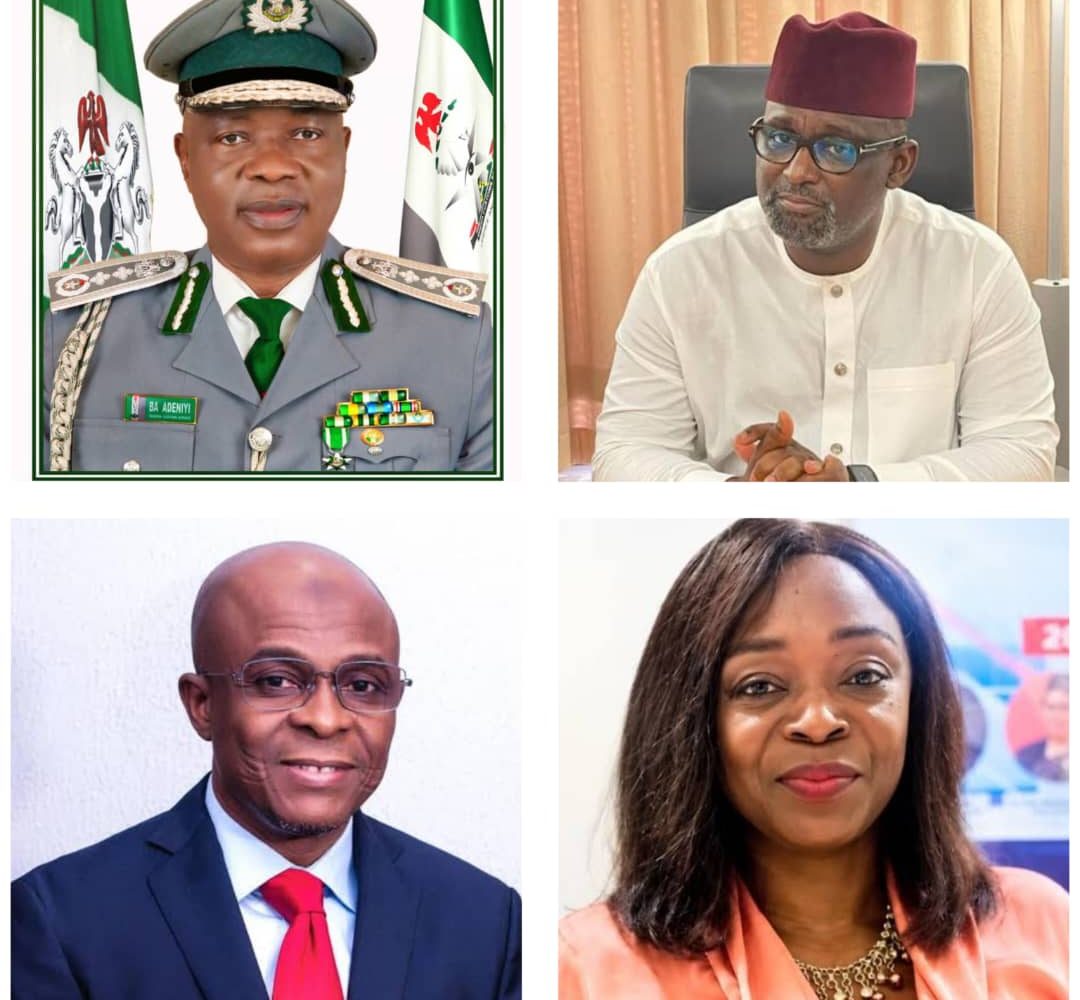
The Comptroller-General of Customs, Dr Bashir Adewale Adeniyi, said the Nigeria Customs Service was moving towards predictive border management, using artificial intelligence, data analytics and digital platforms to identify high-risk cargo and transactions.
He said the future Customs officer must understand digital systems, artificial intelligence and analytical thinking, while warning that technology alone could not modernise the Service.
“A sophisticated platform operated by inadequately trained personnel will simply reproduce inefficiency in digital form,” he said.
Representing the Managing Director of the Nigerian Ports Authority (NPA), Dr Abubakar Dantsoho, the Port Manager, Lagos Port Complex, Apapa, Adebowale Ibrahim, said smart-port development would also depend on skilled workers.
He said the NPA was investing in training through its Port Training Institute and simulation facilities, with future programmes expected to cover smart ports, cybersecurity, green shipping and data-driven decision-making.
The Director-General of the Nigerian Maritime Administration and Safety Agency (NIMASA), Dr Dayo Mobereola, represented by the Assistant Director, Public Relations, Daniel Kajo, said the agency was digitising its operations to improve efficiency, reduce delays and close revenue leakages.
He disclosed that 134 National Seafarers Development Programme cadets were being deployed for sea-time training in the United Kingdom, India and Romania.
NSML, Dangote highlight practical training
The Nigerian Maritime Services Limited (NSML) disclosed that 272 cadets had completed sea-time training under its Seafarers Continuous Development Programme, while another 54 were either in college or onboard vessels.
Presenting a paper on behalf of the Managing Director, Abdulkadir Ahmed, the Manager, Maritime Centre of Excellence, Bonny, Dr Effiong Ekanem-Attah, said the programme combined classroom education with simulation, sea-time and certification.
Delivering the keynote address, the Managing Director, Ports Operations Strategic Business Unit, Dangote Industries Limited, Simeon Omole, warned that Nigeria could lose maritime business if its ports failed to innovate. “Ports that digitise will win. Ports that don’t will be bypassed,” he said.
Omole cited Dangote Refinery’s Single Point Mooring complex, which he said had recorded more than 1,100 tanker calls, as an example of how innovation and local expertise could overcome operational challenges.
He called for improved simulator training, regulatory sandboxes for new marine technologies and stronger partnerships between regulators, operators and academic institutions.
Stakeholders call for stronger training culture
The Chairman of the Occasion and President of the National Council of Managing Directors of Licensed Customs Agents, Mr Lucky Awimero, said Nigeria must rethink its approach to human-capital development. “Nigeria does not train,” Awimero declared.
Meanwhile, the Comptroller of the Federal Operations Unit, Zone “A”, Nigeria Customs Service, Aliyu Gambo, pledged stronger action against smuggling and deeper cooperation with the media.
He said the unit would continue to focus on intelligence-led enforcement, border security and trade facilitation.
Osokpo said the participation of NSML, NPA, NIMASA, Customs, the Federal Ministry of Marine and Blue Economy and other stakeholders demonstrated the importance of collaboration in developing the sector. “Maritime is not just a sector matter. Maritime is a national matter,” she said.
The summit also featured awards recognising Nigerians and stakeholders who had distinguished themselves through service and excellence in the maritime sector.





Comment here