


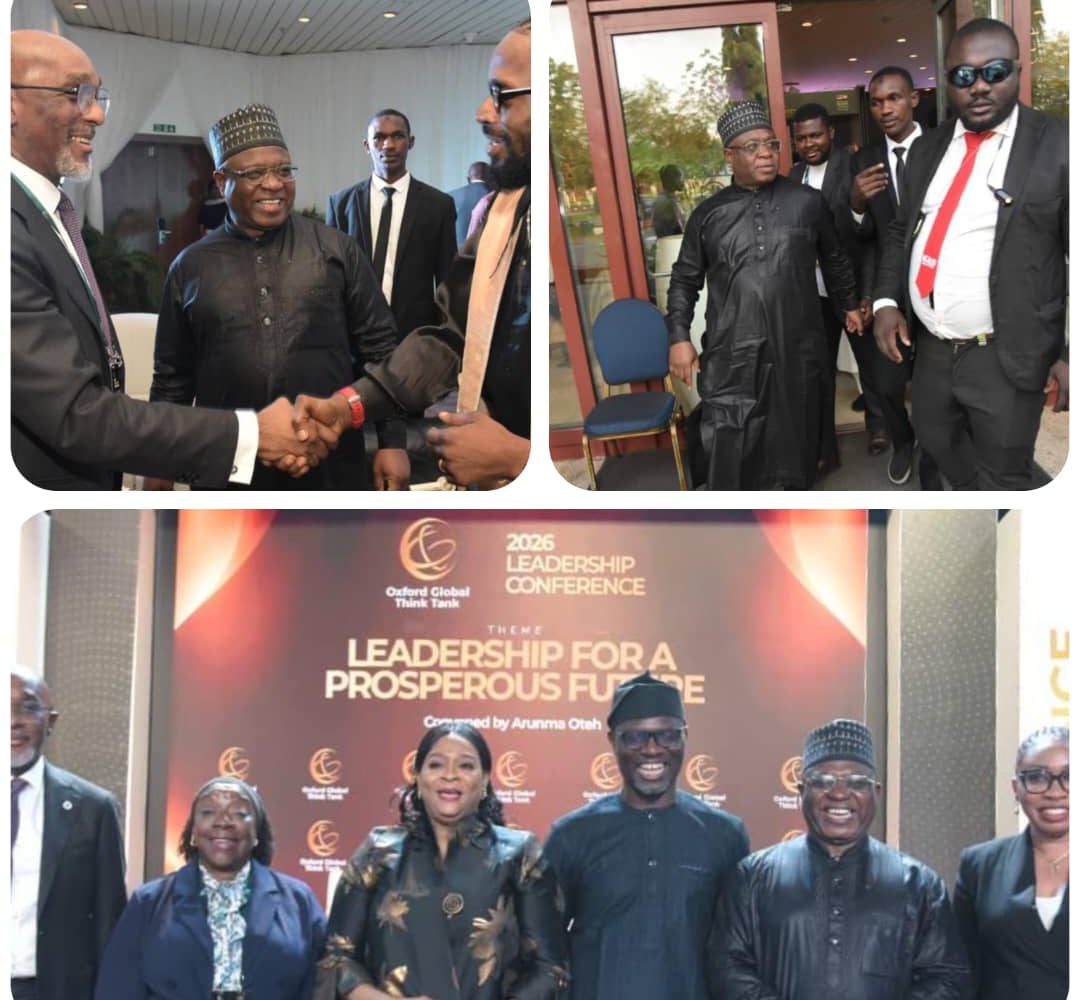
The Chairman of Nigerian Exchange Group (NGX Group), Alhaji (Dr.) Umaru Kwairanga, has called for greater integration of African capital markets to attract investment, deepen liquidity and accelerate the continent’s economic transformation.
Kwairanga said stronger connections among African stock exchanges would enable businesses to access a wider pool of investors while allowing capital within the continent to finance investment opportunities across national boundaries.
He made the call while speaking at the Oxford Global Think Tank 2026 Conference in Abuja on Tuesday, November 3, 2026.The conference, convened by Ms Arunma Oteh, had the theme, “Leadership for a Prosperous Future.”
Kwairanga spoke during a panel session moderated by Nancy Illoh Okeke of the African Independent Television (AIT). Other panellists included Chuka Eseka and Kemi Awodein.
Addressing concerns about Africa’s relatively small share of global market capitalisation, the NGX Group chairman attributed the situation largely to the history and geographical structure of the continent’s financial markets.
According to him, most African capital markets are relatively young compared with those in Europe, the Americas and parts of Asia, while their fragmentation along national boundaries has limited their capacity to attract and absorb significant capital flows.
He also identified historical capital flight, weak institutional structures, limited investment products, inadequate collective investment schemes and a shortage of strong listed companies as factors constraining the development of African markets.
Kwairanga urged African leaders to recognise and promote the continent’s enormous economic potential while accelerating the development of capital markets and strengthening institutions.
 He said Africa must address capital flight, attract foreign investment and leverage its abundant natural resources and investment opportunities to deliver competitive returns.
He further stressed the need for improved transparency, corporate governance and policies that encourage entrepreneurship.
On mobilising domestic savings and institutional investments, Kwairanga said restoring investor confidence through professionalism, integrity, transparency and adequate disclosure remained critical.
He noted that African markets also needed more attractive investment products and viable companies capable of generating sustained interest among investors.
Citing the heightened market interest generated by the Dangote Refinery initial public offering (IPO), he said introducing more investment opportunities could encourage greater participation in the capital market.
The NGX chairman added that the Exchange was introducing user-friendly digital channels to make capital market investments more accessible to younger Nigerians, particularly those who increasingly rely on digital devices for financial transactions.
He also emphasised the importance of investor education, particularly for retail investors, to help them make informed investment decisions and avoid fraudulent investment schemes.
On policy reforms, Kwairanga said improving citizens’ income levels, reducing inflation and making savings more attractive would encourage long-term investments.
He called for stronger financial inclusion initiatives by the Central Bank of Nigeria (CBN), noting that bringing more citizens into the formal financial system would expand the foundation for capital market development.
He also advocated fiscal incentives for individuals and businesses participating in the capital market, adding that pension reforms had demonstrated how policy interventions could deepen the market.
Looking ahead, Kwairanga identified deeper integration of African capital markets as one of the most important reforms required to unlock the continent’s investment potential over the next three years.
He specifically highlighted the African Exchanges Linkage Project as an important foundation for connecting markets across the continent.
He said greater integration, supported by regulatory cooperation, modern market infrastructure and stronger investor confidence, would enable African capital markets to play a more significant role in financing infrastructure, manufacturing, agriculture, technology and other productive sectors.
The NGX chairman also called for reforms to attract more viable companies to list on the stock exchange, arguing that a broader range of listed companies would provide investors with greater investment choices and strengthen market activity.
He further advocated policies that would encourage more businesses to enter the formal economy and access capital market financing.
Kwairanga recalled that Nigeria’s privatisation programme in the early 2000s had significantly boosted the capital market, expressing optimism about the potential benefits of reviving similar initiatives.
 He maintained that stronger institutions, improved investor confidence, increased domestic participation and regional market integration were essential to positioning African capital markets as key drivers of the continent’s economic growth.




Comment here