


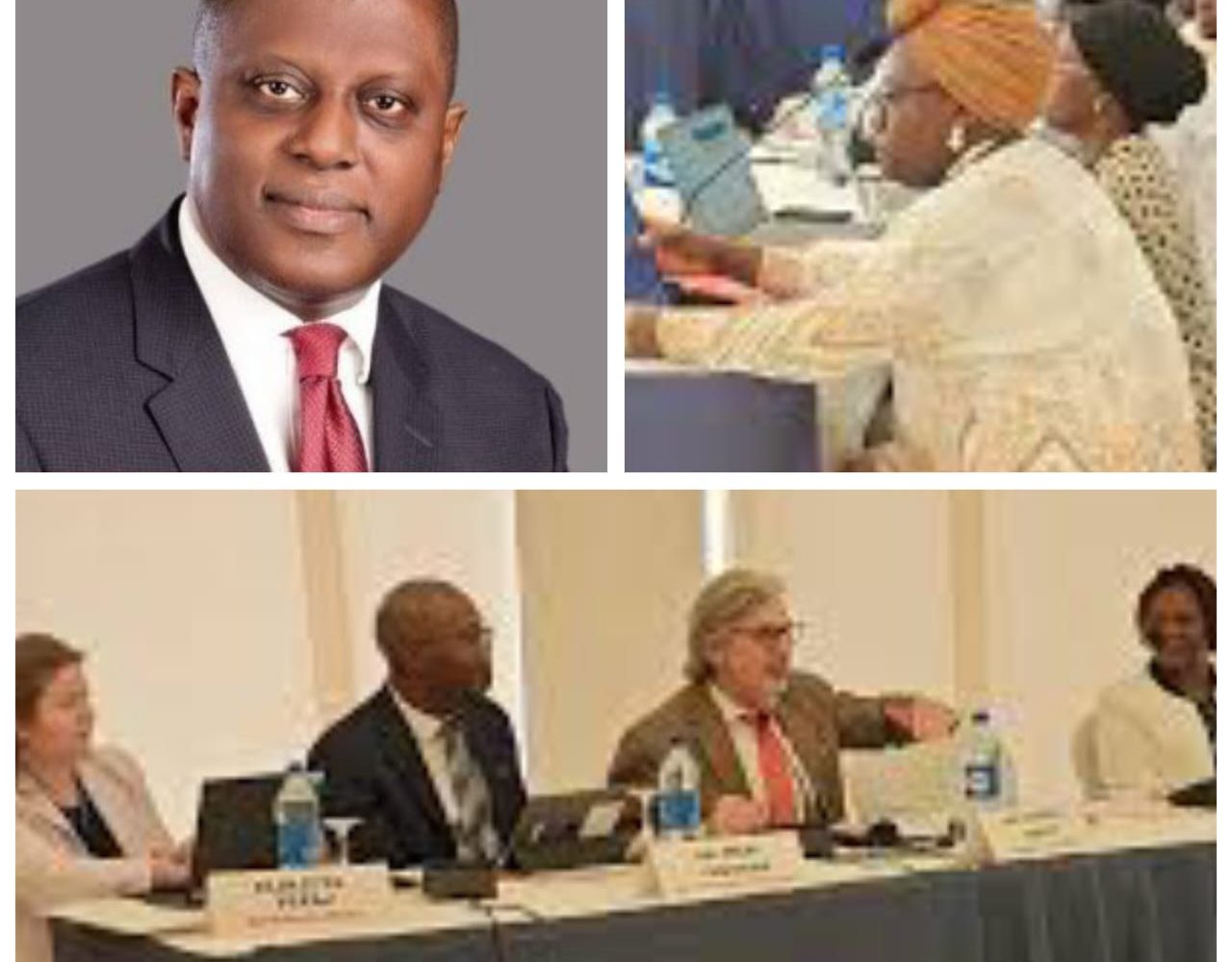
Governor of the Central Bank of Nigeria (CBN), Olayemi Cardoso, has called for stronger collaboration among African financial regulators to effectively manage rising cross-border risks, warning that increasing financial integration across the continent demands coordinated oversight.
Speaking at the 4th Annual IMF/AFRITAC West 2 High-Level Executive Forum for Financial Sector Regulation and Supervision in Abuja, Cardoso said regulatory cooperation must evolve alongside the growing interconnectedness of African banking systems to preserve stability and drive shared economic progress.
He stressed the need for harmonised prudential standards suited to Africa’s economic realities, noting that a unified approach would enable regulators to respond swiftly to emerging vulnerabilities while supporting sustainable and inclusive growth.
Highlighting Nigeria’s regulatory direction, Cardoso referenced the 2024 Banking Sector Recapitalisation Programme, describing it as a forward-looking initiative aimed at strengthening the resilience of the banking industry.
He disclosed that Nigerian banks raised about ₦4.61 trillion in fresh capital despite ongoing economic reforms, with a significant portion sourced from international investors.
On corporate governance, the CBN governor reaffirmed a firm stance against regulatory breaches, noting that the apex bank has moved away from past leniency to enforce stricter compliance and accountability standards within the financial system.
He added that the Bank has introduced measures to restrict access to banking services for persistent large-scale defaulters, a policy designed to reinforce credit discipline, safeguard depositors, and enhance overall financial system integrity.
Cardoso also reiterated the CBN’s commitment to orthodox monetary policy, anchored on restoring price stability and strengthening investor confidence through consistent and disciplined policy actions.
Addressing developments in financial technology, he said the Bank is advancing a regulatory framework that balances innovation with systemic stability.
According to him, ongoing reforms, including the Fintech Policy Report, are aimed at boosting supervisory capacity in response to the rapid evolution of digital financial services.
He further described the forum as a critical platform for dialogue and collaboration, encouraging regulators to leverage it to share insights and develop unified responses to global financial challenges.
In his remarks, Director of IMF AFRITAC West 2, Ivohasina Fizara Razafimahefa, said the gathering fosters engagement between the International Monetary Fund and national authorities, enabling the exchange of expertise and policy ideas.
He noted that discussions at the forum focused on emerging threats to financial stability, including fintech growth, artificial intelligence, digital finance, and climate-related risks, all of which require coordinated regulatory responses across the region.
The forum attracted senior financial sector officials, including central bank deputy governors from six participating countries, and reinforced the importance of collective action in addressing Africa’s evolving financial stability challenges.





Comment here