


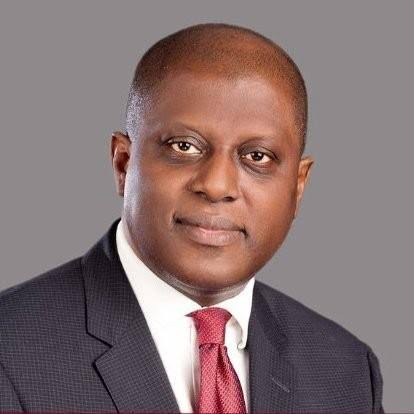
Governor of the Central Bank of Nigeria, Olayemi Cardoso, has said recent monetary and financial sector reforms have strengthened Nigeria’s ability to withstand external shocks and restored investor confidence.
Cardoso made this known while speaking at the Africa Capital Forum in London, held on the sidelines of President Bola Ahmed Tinubu’s state visit to the United Kingdom.
Addressing investors and development partners, the CBN governor said the Bank had built “stronger capacity to withstand shocks” through disciplined policy measures and institutional reforms.
He noted that reforms in the foreign exchange market had improved transparency and liquidity, with the introduction of a new FX manual that simplifies trade and investment processes while removing several legacy capital controls.
Cardoso also disclosed that the apex bank had finalised a new payments system vision aimed at positioning Nigeria as a regional hub for digital and cross-border payments.
On banking sector reforms, he revealed that more than 30 banks have met new capital requirements under the ongoing recapitalisation programme, with verification continuing for others.
According to him, about 28 per cent of the capital raised came from foreign investors, reflecting renewed global confidence in Nigeria’s financial system.
He further highlighted growth in diaspora remittances, noting that inflows have helped diversify foreign exchange reserves and improve resilience against global economic volatility.
“Our focus going forward is to protect the hard-earned stability we have accomplished so investors and stakeholders can plan with confidence,” Cardoso said, adding that the Bank would prioritise transparency, consistent communication, and stronger institutional governance.
The CBN governor also underscored ongoing collaboration with Nigeria’s fintech ecosystem to address regulatory challenges and drive financial inclusion across Africa.
He emphasised the importance of coordination between fiscal and monetary authorities, noting that such alignment is critical for sustainable economic growth.
Cardoso stated that inflation has moderated, exchange rate stability has improved, and ongoing reforms have positioned the economy for growth driven by domestic investment, oil sector reforms, and renewed global trust.
He added that the CBN would remain vigilant in managing inflation and maintaining stability in the foreign exchange market through transparent and consistent policy actions.
According to him, Nigeria’s macroeconomic reforms have moved the country from a stabilisation phase to one focused on capital mobilisation, making it increasingly attractive to global investors.
Cardoso also disclosed that the Bank is reviewing its policy framework to ensure predictability and reduce discretionary interventions, in a bid to sustain confidence and long-term economic stability.




Comment here