



By Newsshelve.
The Nigerian maritime industry must prioritise quality training, advanced technology and practical sea-time opportunities to develop a skilled workforce capable of meeting international standards, the Nigeria LNG Shipping and Marine Services Limited (NSML) has said.
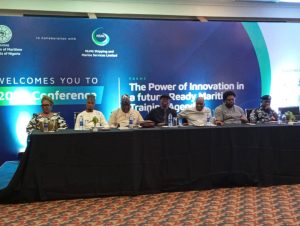
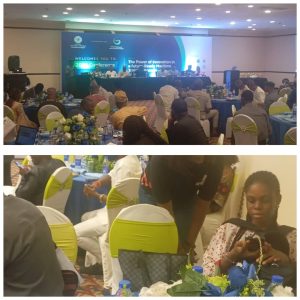
The company stated this at the 2026 Maritime Training Summit of the Association of Maritime Journalists of Nigeria (AMJON), held in Lagos on Friday.
Speaking on “The Role of Maritime Manpower Development in Africa’s Maritime Future,” the Manager of Training, NSML, Dr Effing Attah, who represented the Managing Director/Chief Executive Officer, Abdul-Kadir Ahmad, said the global maritime industry was highly regulated, technology-driven and dependent on competent professionals.
He said access to world-class training and internationally recognised certification was essential to developing a maritime workforce capable of competing in the global industry.
Technology, simulation vital to maritime competence
Attah highlighted the importance of maritime technology ownership, particularly the use of advanced simulation systems in training.
He said NSML’s training infrastructure included systems for marine engineering, marine consultancy and dynamic positioning, enabling trainees to experience real-life operational scenarios.
According to him, the technology helps develop operational and emergency response skills, occupational competence and decision-making capabilities while promoting a stronger safety culture.
“The use of advanced simulation technology narrows the gap between theoretical knowledge and practical application, ensuring trainees acquire competence and readiness for real-world maritime scenarios,” he said.
NSML bridges sea-time gap
The NSML representative also identified access to sea time as one of the persistent bottlenecks in maritime manpower development, particularly for cadets seeking to obtain certificates of competence.
He said the company had designed a programme in partnership with the Maritime Academy of Nigeria to provide cadets with sea-time opportunities on its vessels.
He disclosed that 225 cadets had completed their sea time and proceeded to obtain their certificates of competence, while 54 cadets were currently either on NSML’s vessels or undergoing certificate-of-competence training.
He said the structured pathway from classroom learning to vessel deployment was helping to strengthen Nigeria’s and Africa’s maritime talent pipeline.
Nigerianisation agenda
Attah further said the Nigerian Maritime Administration and Safety Agency (NIMASA) had consistently pursued a Nigerianisation agenda by developing seafarers capable of performing to international standards.
He noted that efforts to increase Nigerian participation in managed vessel operations demonstrated how maritime manpower development could create economic and strategic national value.
Research, consultancy support workforce development
Beyond training, the NSML representative said the company provided maritime research, intelligence and consultancy services across several maritime projects.
These, he said, included shipbuilding and repair, project evaluation, dry-dock supervision, vessel life-cycle support, and crew and vessel management advisory services.
He described the company’s training centre as a knowledge hub where training was continuously informed by industry realities and emerging maritime trends.
“This strengthens the relevance and quality of workforce development efforts,” he said.
Africa’s maritime future
Attah said NSML’s international accreditations and advanced training infrastructure had positioned it as a potential regional hub for maritime excellence.
He said its model demonstrated how African institutions could deliver globally benchmarked maritime training, develop indigenous expertise and retain training investment within the continent.
He added that providing internationally recognised training locally would contribute to the broader transformation of Africa’s maritime manpower ecosystem.
He said sustainable maritime capacity development required more than training alone, stressing the need for an integrated ecosystem combining technology, practical exposure, mentorship, education, research and industry collaboration.
“As Africa seeks to strengthen its position in the global maritime economy, institutions such as the MTI will play a crucial role in shaping the next generation of maritime professionals and ensuring the continent contributes meaningfully to the future of global shipping,” he said.




Comment here