


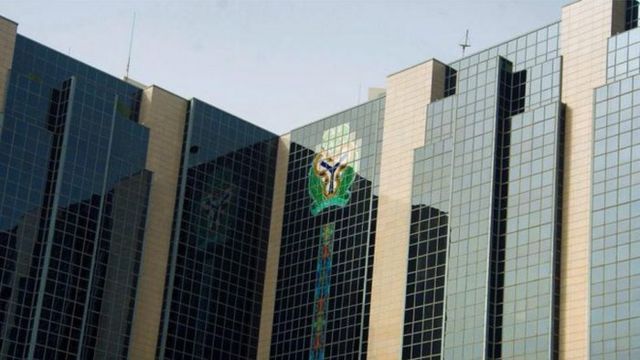
The Monetary Policy Committee (MPC) of the Central Bank of Nigeria (CBN) has retained the Monetary Policy Rate (MPR) at 26.5 per cent, maintaining its cautious monetary policy stance amid heightened geopolitical tensions in the Middle East and lingering inflationary pressures.
The decision was reached at the 306th meeting of the MPC held on July 20 and 21, 2026, with all 11 members in attendance.
Besides retaining the benchmark interest rate, the Committee also left other key monetary policy parameters unchanged. The asymmetric corridor around the MPR was maintained at +50/-450 basis points, while the Cash Reserve Ratio (CRR) remained at 45 per cent for Deposit Money Banks, 16 per cent for Merchant Banks, and 75 per cent for non-Treasury Single Account (TSA) public sector deposits.
Explaining the decision, the Committee said although headline inflation eased marginally in June, global uncertainties had intensified following renewed hostilities in the Middle East, necessitating a cautious approach to monetary policy.
“The Committee’s decision to maintain the current policy stance followed a thorough assessment of the balance of risks. Although headline inflation moderated marginally in June 2026, global uncertainties have heightened due mainly to the renewed hostilities in the Middle East. In view of the evolving developments, maintaining a cautious monetary policy stance remains appropriate,” the CBN said.
The MPC acknowledged that the renewed conflict in the Middle East poses risks through higher global energy prices and possible pass-through effects on domestic inflation. However, it noted that Nigeria’s economy has remained relatively resilient, attributing this to earlier fiscal and monetary reforms.
The Committee also welcomed the Federal Government’s renewed emphasis on policy coordination, noting that closer collaboration between fiscal and monetary authorities had helped cushion the domestic economy from external shocks.
According to the MPC, stronger alignment between both arms of economic management would improve policy effectiveness and support the country’s macroeconomic objectives.
The Committee further commended the Federal Government’s efforts to increase crude oil production and encouraged the implementation of reforms to unlock opportunities in other sectors, particularly solid minerals, to diversify government revenue.
It also expressed satisfaction with the outcome of the banking sector recapitalisation exercise, saying the programme had strengthened the resilience of the financial system as reflected in improved prudential and financial soundness indicators. Nevertheless, it urged the apex bank to sustain effective supervision to safeguard financial stability.
On inflation, the MPC noted that headline inflation eased slightly to 15.91 per cent in June 2026 from 15.93 per cent in May, ending three consecutive months of increases.
While food inflation rose to 17.52 per cent from 16.96 per cent, reflecting persistent supply constraints, core inflation declined to 15.92 per cent from 16.82 per cent, largely due to continued exchange rate stability.
The Committee also observed that the 12-month average inflation rate fell for the sixth consecutive month to 17.63 per cent in June from 18.36 per cent in May, while month-on-month headline inflation slowed to 1.66 per cent from 1.75 per cent.
On economic activity, the MPC said Nigeria’s Gross Domestic Product (GDP) expanded by 3.89 per cent in the first quarter of 2026, supported mainly by the non-oil sector, which recorded 3.94 per cent growth driven by telecommunications, financial services, trade, transportation and other services.
Although growth in the oil sector slowed to 2.57 per cent due to maintenance of production facilities, the Committee noted signs of improving economic activity as the composite Purchasing Managers’ Index (PMI) rose to 50.1 points in June, indicating a return to expansion.
The Committee also highlighted the country’s improving external position, with gross external reserves rising to $52.52 billion as of July 17, 2026, up from $50.47 billion at the end of May. The reserve level is sufficient to finance approximately 11 months of imports, well above the international benchmark of three months.
Looking ahead, the MPC projected that economic growth would remain resilient in 2026, supported by improving crude oil production, expansion in business activities and the positive effects of ongoing policy reforms.
It also expressed optimism that inflation would continue to moderate over the medium term on the back of exchange rate stability, previous monetary policy tightening and improved food supply during the harvest season.
However, the Committee cautioned that a prolonged escalation of the Middle East conflict remains the biggest downside risk to both inflation and growth, reiterating its commitment to maintaining price and financial system stability.
The MPC is scheduled to hold its next meeting on September 21 and 22, 2026.





Comment here