


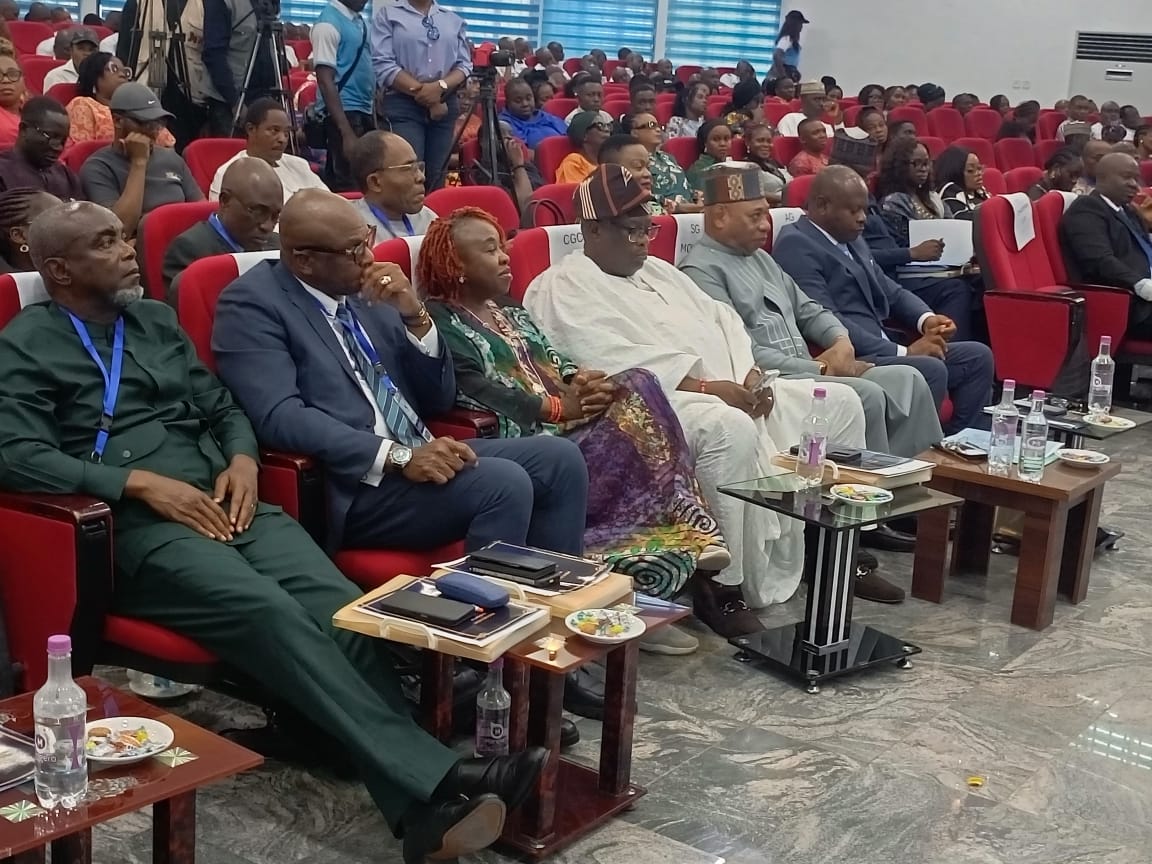
The Secretary-General of the Maritime Organisation of West and Central Africa (MOWCA), Paul Adalikwu, has reiterated the agency’s commitment to closing the maritime human capital gap across the region through stronger collaboration among training institutions.
Adalikwu made this known during the opening of a four-day exchange visit involving the Regional Maritime University, Ghana, and the Académie Régionale des Sciences et Techniques de la Mer, Côte d’Ivoire, hosted by the Maritime Academy of Nigeria.
He noted that over 90 percent of trade in West and Central Africa is transported by sea, stressing that the region’s ability to maximize its maritime potential depends largely on the quality of its human capital.
While expressing optimism about the prospects of institutional synergy, the MOWCA chief highlighted key challenges facing maritime training in the region, including digital transformation, emerging maritime technologies, decarbonisation and environmental compliance, as well as security concerns in the Gulf of Guinea.
Adalikwu also pointed to the increasing global standards for maritime training and certification, noting that harmonised efforts among institutions would enhance mutual recognition of qualifications and improve job placement opportunities for African youths.
According to him, the collaboration is expected to create a platform for harmonising curricula and training standards, promoting faculty and student exchanges, sharing infrastructure and research, and developing joint certification programmes aligned with international benchmarks.
“Ultimately, what we seek to build is not just cooperation, but a cohesive regional maritime knowledge ecosystem,” he said, reaffirming MOWCA’s commitment to initiatives that promote a skilled workforce, safe and efficient shipping, and regional integration.
He added that the partnership would also support intra-African trade under the African Continental Free Trade Area and encourage research into alternative marine energy sources, alongside efforts to establish sustainable institutions such as a proposed regional maritime development bank.
In his remarks, Acting Rector of the Maritime Academy of Nigeria, Kevin Okonna, described the exchange programme as a significant milestone aimed at deepening collaboration among maritime training institutions within and beyond the region.
Okonna recalled that the academy had hosted officials from the Regional Maritime University during its 2025 graduation ceremony, where a memorandum of understanding was signed.
He added that the institution had also engaged the Liberian Maritime Administration in similar collaborative efforts to boost global recognition of certifications.
He commended MOWCA for advancing the harmonisation of maritime education and expressed confidence that the exchange would enhance knowledge sharing, particularly in the Standards of Training, Certification and Watchkeeping (STCW).
Also speaking, Acting Vice Chancellor of the Regional Maritime University, Jethro Brooks, praised MOWCA’s initiative, urging institutions across Africa to embrace collaboration as a pathway to rapid development.
Similarly, Director General of the Abidjan-based academy, Coulibally Kareem, described the initiative as a foundation for sustainable partnerships that would strengthen Africa’s maritime training capacity and global relevance.
A former official of the International Maritime Organization, William Azuh, also commended the initiative, describing it as a timely and bold step towards advancing maritime training development across MOWCA member states.





Comment here