Omatseye Urges Nigeria to Leverage Technology, Processed Minerals to Boost Maritime Trade
November 14, 2026045
Barrister Temisan Omatseye, former Director-General of the Nigerian Maritime Administration and Safety Agency (NIMASA), has called for stronger use of technology, improved cargo logistics and value addition in the solid minerals sector to strengthen Nigeria’s maritime trade capacity and support its ambition of building a $1 trillion economy.
Omatseye made the call during a technical session at the National Conference of the Network of Nigeria Maritime Journalists (NNMJ), held on Thursday, November 12, 2026, where stakeholders examined the capacity of Nigeria’s ports to support increased trade and economic growth.
He urged maritime journalists to go beyond reporting events and incorporate reliable data and figures into their stories, arguing that evidence-based journalism would help the public make informed decisions and hold institutions accountable.
According to him, stories become more meaningful and impactful when supported by data that explains the scale of a problem, measures progress and provides a basis for assessing policy outcomes.
Omatseye also questioned whether Nigeria currently possesses the infrastructure and operational capacity required to support a $1 trillion economy, particularly in terms of port efficiency, shipping capacity and logistics.
He challenged stakeholders to consider how the country could increase the export of processed solid minerals, such as lithium, rather than continuing to depend heavily on the export of raw commodities and agricultural produce.
He argued that processing minerals locally before export could create greater economic value and strengthen Nigeria’s non-oil export earnings.
The former NIMASA chief also sought clarification on the number and categories of vessels described as Nigerian-owned, questioning whether the figures included smaller offshore support vessels and anchor handlers or larger commercial vessels such as tankers, dry cargo ships, very large crude carriers and liquefied natural gas carriers.
He further proposed the development of a feeder shipping system that would connect major ports such as Lekki with Delta and Eastern ports, allowing larger vessels to concentrate on major hubs while smaller vessels distribute cargo to other ports.
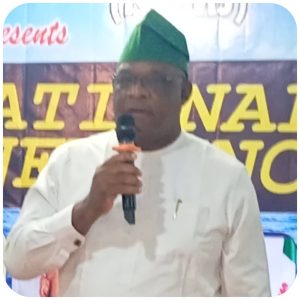
Temisan Omatseye.
On trade facilitation, Omatseye advocated the introduction of a ship entry notice system that would require vessels to submit relevant information before arriving in Nigerian waters.
He said such a system could provide the Nigerian Maritime Administration and Safety Agency, Nigerian Ports Authority and Nigeria Customs Service with advance information on vessels and their cargoes, enabling the agencies to prepare for arrivals, improve security and speed up cargo clearance.
He also suggested that Customs could deploy officers to major foreign ports from which Nigeria receives substantial imports to support cargo verification before shipment.
Omatseye said the use of artificial intelligence and other digital tools could strengthen the proposed process, improve cargo tracking and help prevent fraudulent declarations and concealment of prohibited or misdeclared goods.
Responding to the questions, maritime expert and keynote speaker, Dr Emeka Akabogu, said the central objective should be to ensure that Nigeria’s ports can efficiently support the volume of trade required for a $1 trillion economy.
Akabogu stressed that the country must be able to clear cargo seamlessly, reduce vessel turnaround time and minimise delays and demurrage.
He said vessels should be able to enter and leave Nigerian ports quickly, while port facilities must have the capacity to handle incoming cargo and release it without unnecessary bottlenecks.
According to him, the National Single Window project is particularly important to achieving this objective, as its effective implementation would improve coordination among government agencies, simplify trade documentation and reduce cargo clearance delays.
He maintained that the maritime sector would play a critical role in determining whether Nigeria could achieve its economic ambition, warning that the country’s broader growth targets would be difficult to realise if its ports could not efficiently facilitate trade.
Akabogu said: “Let us be able to clear cargo through our ports seamlessly. That is it.”
He added that the practical test of progress by 2030 would be whether Nigerian ports could handle trade more efficiently, with faster cargo clearance, quicker vessel movement and reduced demurrage.
Dr Emeka Akabogu.
The technical session formed part of the NNMJ conference themed “Seaport Modernisation, Trade Facilitation and Revenue.”










Comment here