


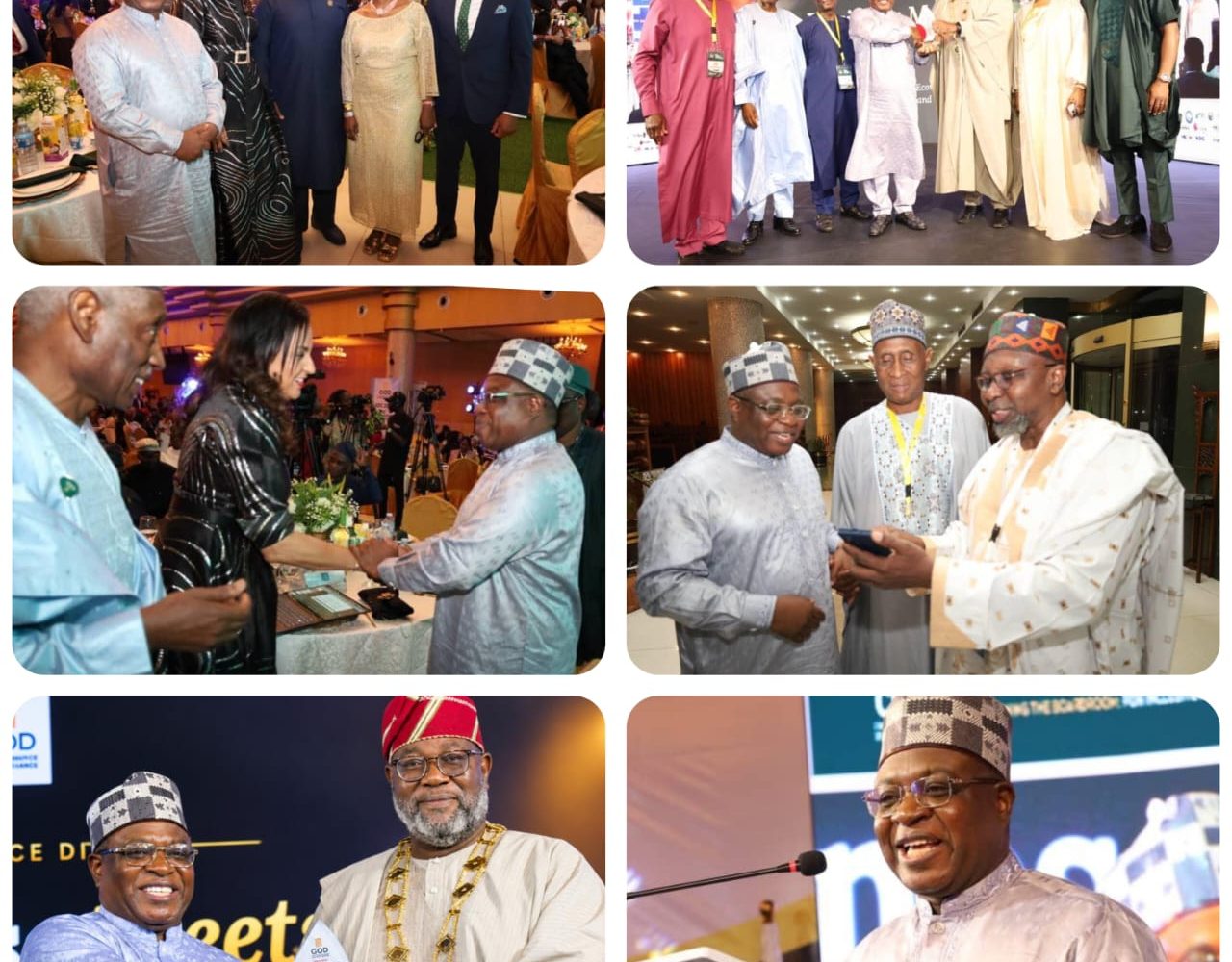
The Chairman of Nigerian Exchange Group (NGX Group), Alhaji (Dr.) Umaru Kwairanga, has identified strong corporate governance, institutional integrity and long-term investment as critical requirements for Nigeria to achieve its ambition of building a $1 trillion economy.
Kwairanga said Nigeria must prioritise the mobilisation of patient capital to finance critical infrastructure, expand productive enterprises and drive sustainable economic growth.
He made this known on Wednesday, November 11, 2026, while delivering his remarks as Chairman of the Chartered Institute of Directors (CIoD) 2026 Annual Directors Conference Dinner, themed ‘Building a $1 Trillion Economy through Sustainable Capital and Governance’, at the Oriental Banquet Hall, Victoria Island, Lagos.
According to him, achieving the $1 trillion economic target requires more than policy reforms, stressing the need for sustained capital mobilisation, strong institutions and governance structures capable of inspiring confidence among local and international investors.
He described the capital market as central to the country’s economic transformation, noting that it provides a platform for financing infrastructure, expanding businesses and unlocking investment opportunities across critical sectors.
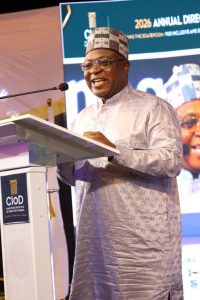
Kwairanga emphasised that the depth and resilience of Nigeria’s capital market would determine the country’s capacity to attract patient, long-term investments required to support sustainable growth.
He maintained that good governance remains fundamental to attracting investments, declaring that capital follows confidence, which can only be sustained through transparency, accountability, regulatory consistency and institutional integrity.
“Capital follows confidence, and confidence is built on good governance. Transparency, accountability, regulatory consistency and institutional integrity are therefore not merely corporate obligations but essential drivers of economic competitiveness,” he said.
The NGX Group chairman warned against reliance on short-term speculative investments, popularly described as hot money, arguing that sustainable economic development requires long-term capital directed towards critical infrastructure and other productive sectors.
“We cannot build an economy with hot money. Economic development needs patient capital that is long-term in nature and can be directed to critical infrastructure that is the foundation for solid, strong growth,” he stated.
He added that public and private institutions must demonstrate high governance standards to assure investors that their investments are secure and properly managed.

On the opportunities presented by digital technology, Kwairanga said the emerging digital economy offers established businesses new channels to expand their markets while providing young entrepreneurs with opportunities to commercialise innovative ideas and grow their businesses.
He urged corporate leaders to identify ways of leveraging digital technology and social media to expand economic activities, improve service delivery and accelerate Nigeria’s journey towards the $1 trillion economy target.
Kwairanga reaffirmed NGX Group’s commitment to strengthening market integrity, increasing investor participation and developing a capital market that supports sustainable wealth creation.
He stressed that Nigeria’s $1 trillion economic ambition should not be measured solely by the size of its gross domestic product but by the country’s ability to build a resilient, inclusive and globally competitive economy capable of delivering lasting prosperity to its citizens.
“Ultimately, building a $1 trillion economy is not simply about achieving a numerical target; it is about creating a resilient, inclusive and globally competitive economy that delivers lasting prosperity for Nigerians,” he said.
The NGX chairman also congratulated the Chartered Institute of Directors on the successful organisation of its annual conference, describing the institute as a leading institution in capacity building and advocacy for corporate governance practitioners in Nigeria.
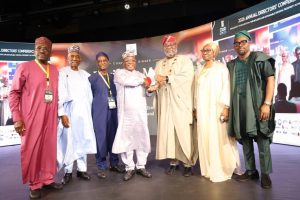
He urged participants at the dinner to use the occasion to network and strengthen relationships beyond the formal sessions of the conference.




Comment here