


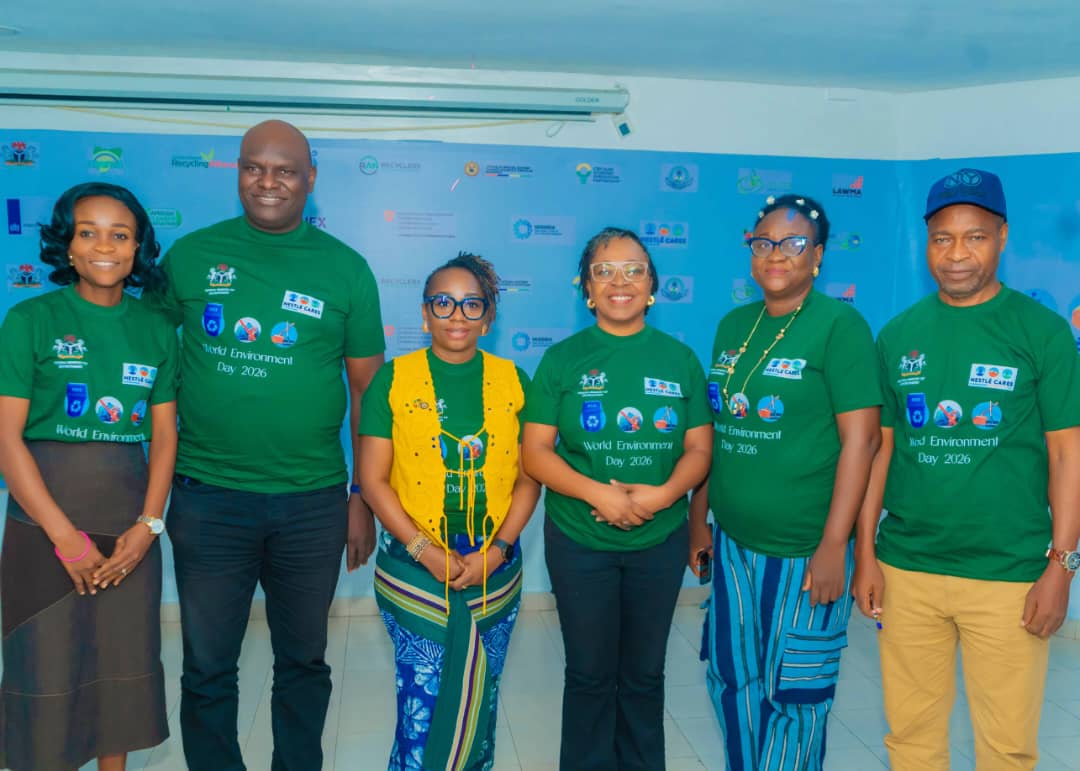
Nestlé Nigeria has launched a multi-stakeholder coalition to drive sustained environmental action as part of activities marking the 2026 World Environment Day, signaling a shift from awareness campaigns to a more coordinated approach aimed at advancing circular economy solutions across the country.
The company said the initiative, which builds on six years of nationwide environmental awareness and clean-up programmes, will be implemented in 12 locations across Nigeria through community sensitisation and clean-up activities.
According to Nestlé Nigeria, the coalition brings together government agencies, regulators, industry stakeholders, recyclers and development partners to promote sustainable waste management practices, strengthen collection systems and reduce waste leakage into the environment.
The programme is expected to enhance environmental awareness, support waste recovery efforts and encourage responsible waste management in participating communities, contributing to cleaner public spaces and more sustainable communities.
Speaking at the launch, the Lead, Corporate Communications, Corporate Affairs and Sustainability at Nestlé Nigeria, Victoria Uwadoka, said improved waste management outcomes require collaboration across the entire value chain.
“Waste management outcomes improve when intervention shifts from awareness alone to shared accountability across the value chain. This coalition is designed to connect policy, infrastructure, community action, and market-based recovery systems in a way that can deliver more durable environmental results,” she said.
Uwadoka noted that the initiative reinforces Nestlé Nigeria’s commitment to plastics neutrality and responsible packaging while supporting stronger waste recovery systems and deeper collaboration across the plastics value chain.
She added that the coalition serves as a scalable model for public-private sector collaboration in addressing environmental challenges.
Nestlé Nigeria disclosed that since 2019, its partnerships with waste recovery organisations including Chanja Datti, Wecyclers and MECOM have resulted in the recovery of more than 60,000 metric tonnes of plastic for recycling, helping to divert significant volumes of waste from the environment and return them to productive use.
The company also highlighted its Employee Plastics Collection Scheme, launched in 2022, which has recovered over 12,000 kilograms of plastic, promoting responsible waste management among employees and encouraging behavioural change.
The coalition comprises key institutions across the plastics value chain, including the Federal Ministry of Environment, the National Environmental Standards and Regulations Enforcement Agency (NESREA), the Lagos State Ministry of Environment and the Lagos State Waste Management Authority (LAWMA).
Other partners include industry platforms such as the National Plastics Action Partnership (NPAP), the Food and Beverage Recycling Alliance (FBRA), the Circular Economy Innovation Partnership (CEIP), and the Recyclers Association of Nigeria (RAN).
The initiative is supported by development partners, including the Swiss Consulate and the Kingdom of the Netherlands. It is being implemented by the African Clean-Up Initiative and amplified through a strategic media partnership with News Central.
Representing the Minister of Environment, Mrs. Olabimpe Adenaike, Controller of the Lagos Field Office of the Federal Ministry of Environment, commended Nestlé Nigeria and its partners for promoting environmental sustainability and climate resilience.
“This initiative reflects a strong commitment to environmental sustainability, community development and responsible environmental practices. It aligns with the Ministry’s mandate to drive climate action and environmental safety,” she said.
Adenaike urged Nigerians to embrace proper waste management, recycling and sustainable living practices in support of efforts to build a cleaner, greener and healthier nation.
Nestlé Nigeria said the 2026 World Environment Day programme marks its seventh year of environmental stewardship and reflects a deliberate move towards broader systems collaboration designed to deliver long-term environmental impact.






Comment here