


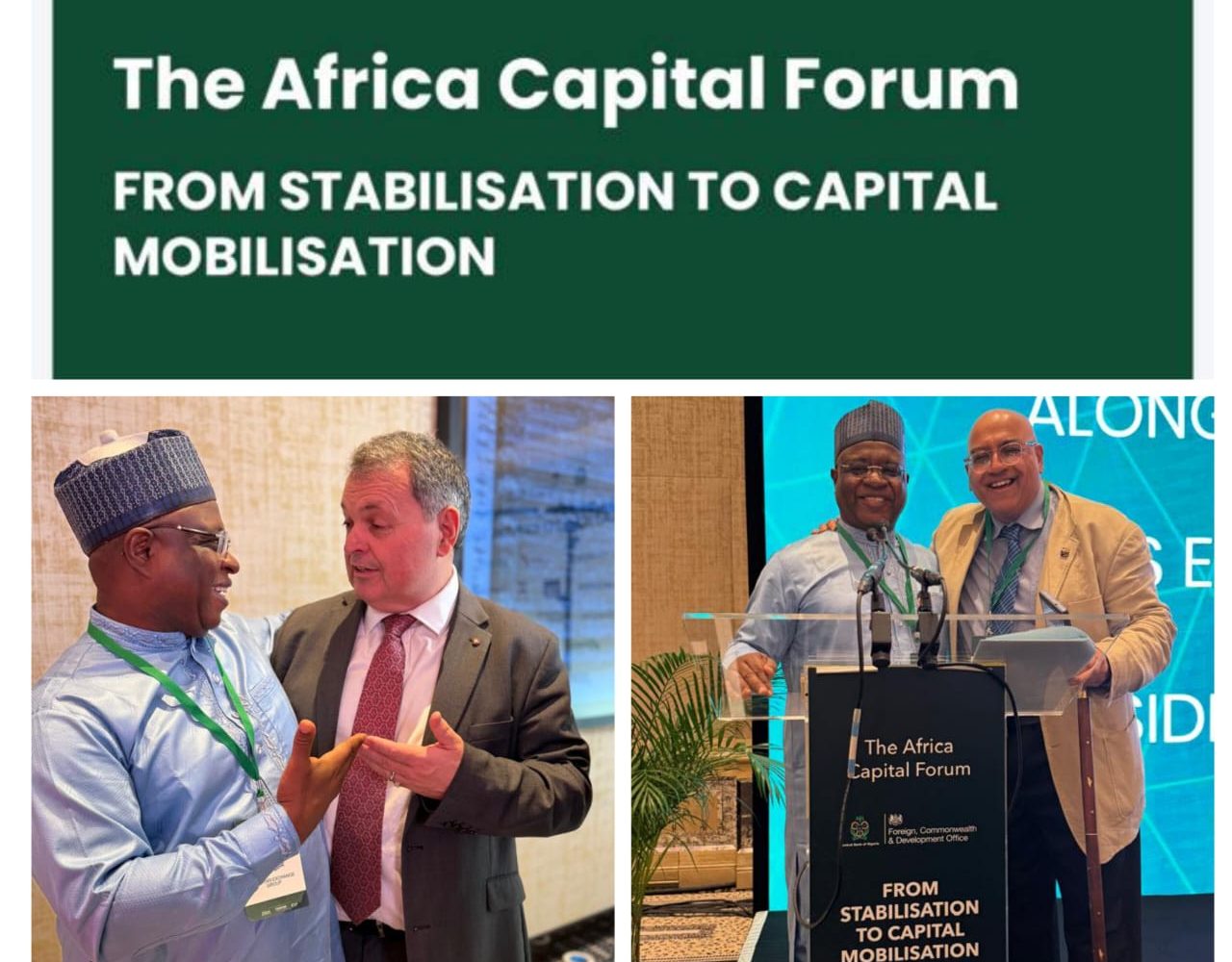
Chairman of the Nigerian Exchange Group (NGX Group), Dr. Umaru Kwairanga, has said Nigeria’s economy is undergoing a steady recovery, driven by reforms that have improved stability and strengthened investor confidence.
Speaking at the Africa Capital Forum held at Peninsula London on Tuesday, Kwairanga highlighted Nigeria’s transition “from stabilisation to capital mobilisation,” noting that recent economic policies under President Bola Ahmed Tinubu have begun to yield measurable results.
He acknowledged that the country faced prolonged economic strain marked by low investor confidence, foreign exchange shortages, declining manufacturing output, and heavy dependence on crude oil exports.
However, he said the administration’s policy decisions, though initially challenging for citizens, have helped reposition the economy for sustainable growth.
Kwairanga pointed to data from the Central Bank of Nigeria (CBN), led by Governor Dr. Olayemi Cardoso, as evidence of improving macroeconomic indicators. He added that the performance of the Nigerian capital market further underscores the impact of the reforms.
According to him, the Nigerian Exchange has recorded significant growth since President Tinubu assumed office. The All Share Index rose from 55,808 to over 201,000 points, representing a 261 per cent increase.

Market capitalisation also surged from N30.38 trillion to N129.32 trillion, a 325 per cent rise, while trading volumes and values have quadrupled within the same period.
“In the case of the Nigerian capital market, we have not only stabilised, we have grown tremendously,” he said.
Looking ahead, Kwairanga disclosed that the NGX Group aims to triple key market indices within the next two years.
He revealed plans for major listings, including the anticipated listing of the Dangote Refinery and Petrochemical Complex, expected before mid-2026.
He also reiterated support for the Federal Government’s ambition to grow Nigeria’s economy to $1 trillion by 2030, noting that achieving this target would require significant domestic and foreign investment.
Kwairanga urged global investors to consider Nigeria as a prime investment destination, describing it as a safe and promising hub for capital in Africa.
Nigeria, which accounts for more than a quarter of Africa’s population, remains central to the continent’s economic outlook, reflecting both its challenges and growth potential.




Comment here