


By Mercy Oku.
The Nigeria Deposit Insurance Corporation (NDIC) has intensified efforts to strengthen public trust in the nation’s banking system through enhanced insurance coverage and improved claims settlement processes.
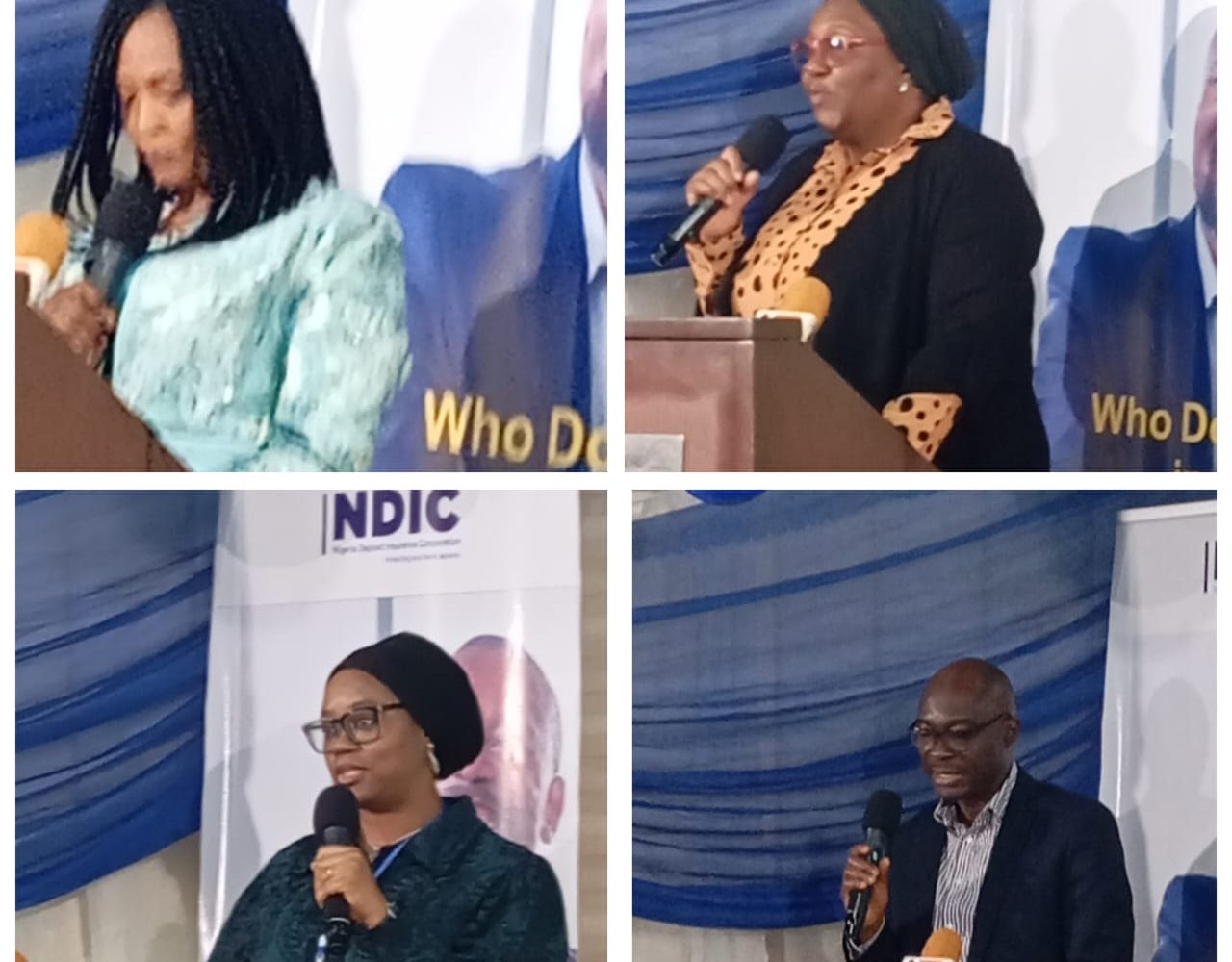
This was disclosed at the NDIC Stakeholders’ Town Hall Meeting held in Lagos on Saturday, where representatives of the Central Bank of Nigeria (CBN), financial institutions, trade associations, civil society organisations, academia, students, youth and women groups, as well as members of the media, gathered to discuss depositor protection and financial system stability.
Speaking at the event, the Managing Director/Chief Executive of NDIC, Sunday Thomson, represented by the Director of the Bank Examination Department, Adeyinka Olukoya, stressed the importance of addressing widespread misconceptions about the Deposit Insurance System (DIS).
He noted that many members of the public remain unclear about the scope, benefits and limitations of deposit insurance, including what is covered, steps to take when a bank is closed, and how depositors are reimbursed following the revocation of a banking licence.
According to him, the town hall provided an opportunity to clarify these issues in practical terms and empower depositors with accurate information on how their funds are protected.
Olukoya highlighted the corporation’s strengthened protection framework, stating that depositors of deposit money banks, mobile money operators and non-interest banks are now insured up to N5 million, while those of microfinance banks, primary mortgage institutions and payment service banks are covered up to N2 million.
He explained that in the event of a bank failure, depositors are promptly paid up to the insured limit.
Customers with balances above the insured threshold receive the initial insured sum, while the remaining funds are paid as liquidation dividends upon realisation of the bank’s assets and recovery of outstanding debts. He added that the expanded coverage protects about 99 per cent of depositors in Nigeria.
The NDIC boss further disclosed that payout processes have been improved and urged depositors to ensure their Bank Verification Number (BVN) is properly linked to their accounts to facilitate seamless access to insured deposits.
In her opening remarks, the Director of Asset Management Department, Patricia Okosun, said the theme of the meeting, “Strengthening Depositors’ Confidence in NDIC’s Role in Financial System Stability and Consumer Protection,” underscores the corporation’s mandate to safeguard depositors’ savings.
She explained that the NDIC steps in to pay insured sums promptly when a bank fails and works to recover additional funds for depositors with balances above the insured limit through liquidation dividends.
Okosun described the town hall as a direct and interactive platform for engaging diverse stakeholders, clarifying misconceptions about deposit insurance and reinforcing public confidence in the banking system.
She added that the initiative forms part of a broader stakeholder engagement programme being implemented across selected locations nationwide.
Providing further insight into the engagement, the Head of Communication and Public Affairs Department, Hawwau Gambo, said recent developments in the banking sector had made sustained public engagement imperative.
She cited the revocation of operating licences of some banks by the Central Bank of Nigeria and NDIC’s subsequent payment of depositors, as well as ongoing recapitalisation efforts in the banking industry, as factors that have heightened public interest and, in some cases, fuelled misconceptions and rumours.
Gambo said the corporation considers proactive stakeholder engagement critical to providing clarity, building trust and strengthening depositor confidence.

She added that the programme features presentations on depositor protection, customer responsibilities and financial prudence, alongside evaluation tools to assess awareness levels and measure the impact of the initiative.





Comment here