



The Nigeria Customs Service (NCS), Apapa Area Command, generated ₦302.95 billion in October 2026, representing a 7.13 per cent increase over the ₦282.79 billion recorded in September.
The October revenue collection amounted to ₦302,952,570,769.24, indicating an increase of ₦20.16 billion month-on-month.
The performance marks another month in which the Command exceeded the ₦300 billion revenue threshold, following its record collection of over ₦323 billion in July 2026.
The development comes barely a month after Comptroller Murtala Mu’azu assumed office as Customs Area Controller on September 29, 2026.
According to a statement issued on Thursday by the Command’s Public Relations Officer, Chief Superintendent of Customs Isah Sulaiman, the latest revenue performance reflects the Command’s efforts to strengthen revenue generation while facilitating legitimate trade.
Since assuming office, Mu’azu has prioritised stakeholder engagement, operational efficiency and improved service delivery in line with the Comptroller-General of Customs, Bashir Adewale Adeniyi’s policy thrust of Consolidation, Collaboration and Innovation.
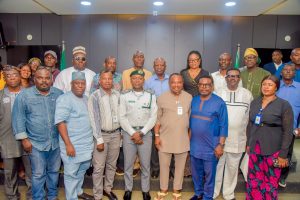
As part of this approach, the new Area Controller convened a stakeholder engagement meeting on October 5, bringing together importers, exporters, licensed customs agents, shipping companies and terminal operators.
The meeting addressed operational challenges affecting port users, including delays in Demand Notice processing, cargo clearance bottlenecks and other concerns associated with port operations.
The CAC has also embarked on courtesy visits to key stakeholders and strategic partners within the port community to strengthen institutional relationships and promote cooperation.

On operational reforms, the Command has intensified efforts to review and streamline the processing of Transire to eliminate unnecessary bureaucratic bottlenecks, improve inter-departmental coordination and reduce processing time.
Mu’azu said the initiative was designed to ensure that officers discharged their responsibilities more efficiently without compromising compliance and control measures.
He stressed that traders should not suffer the consequences of avoidable administrative lapses and delays, adding that the Command was committed to identifying operational challenges and implementing practical solutions to improve service delivery.
The Area Controller has also directed that cargo examinations must strictly follow established procedures, with the required documentation and authorisation.
He warned officers against unwarranted, repetitive and unnecessary examinations capable of frustrating legitimate business transactions.
According to him, cargo examinations must not become a source of avoidable delays, while officers are expected to perform their duties promptly and professionally without compromising revenue protection, regulatory compliance and national security.
The directives, the statement noted, are aimed at improving cargo clearance and turnaround time in accordance with the Nigeria Customs Service Act 2023.
Meanwhile, the Command recorded significant enforcement successes during the period, intercepting 437 sachets of Cannabis Sativa weighing 392.5 kilogrammes in two separate containers.
The seizures comprised 162 sachets weighing 125 kilogrammes in container number MSKU0486747 and another 275 sachets weighing 267.5 kilogrammes in container number TEMU6149358.
The seized narcotics have a combined Duty Paid Value (DPV) of ₦196.13 million.
The statement said the consignments were intercepted during joint examinations conducted with relevant sister agencies, underscoring the Command’s commitment to preventing the use of Nigeria’s maritime gateway for illicit trade.
The Apapa Area Command reaffirmed its commitment to sustaining revenue growth, strengthening enforcement and deepening stakeholder collaboration to improve port operations.

It added that under Mu’azu’s leadership, the Command would continue to balance revenue generation and national security with the need to create an enabling environment for legitimate trade and economic growth.




Comment here