


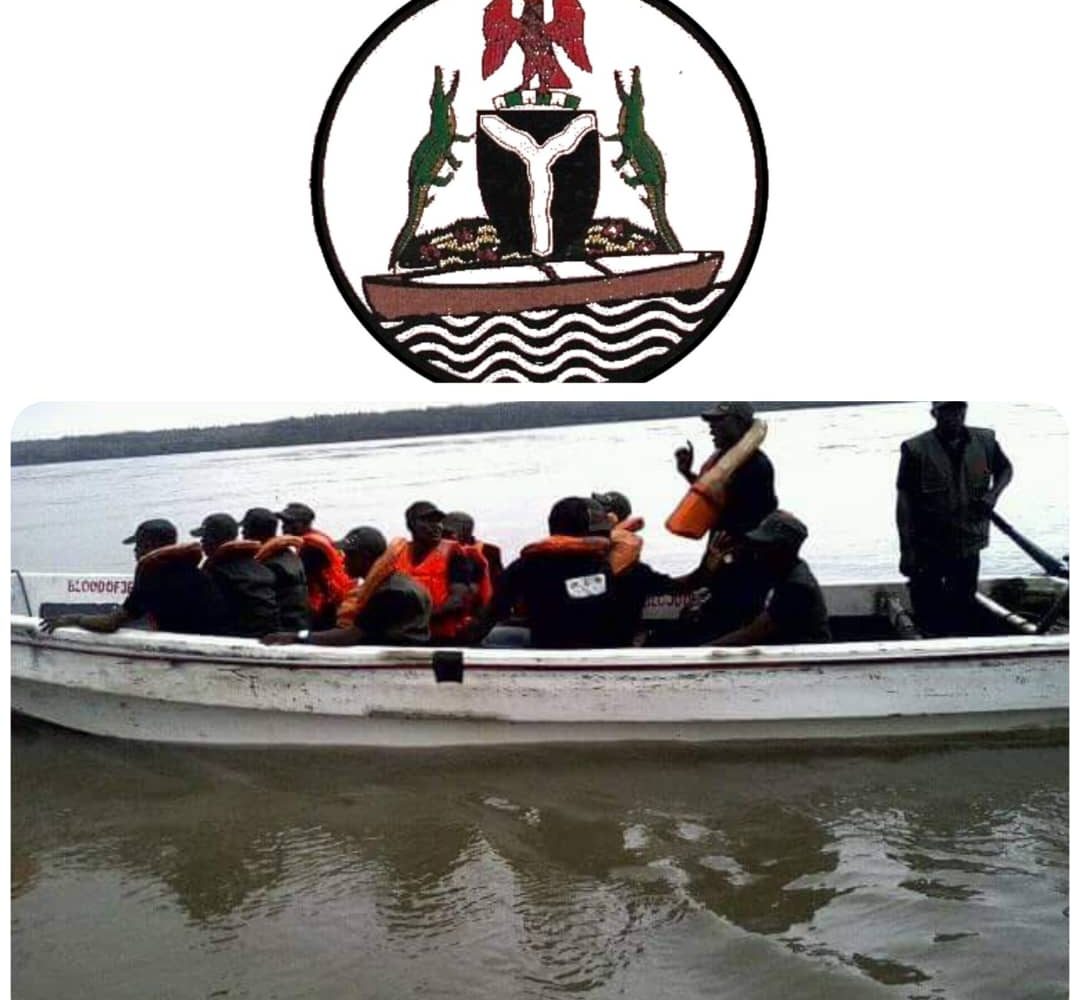
WARRI, Delta State – Rising floodwaters have displaced residents of several riverine communities across parts of the Niger Delta, forcing some families to temporarily relocate to neighbouring areas considered safer.
The worsening situation was disclosed by Captain Eric Foutoro, Officer in Charge of the Delta, Edo and Bayelsa States Waterways Patrol and Head of Riverine Security (Coast-Guard of the Federation), after a recent patrol operation across waterways in the region.
Foutoro said patrol teams observed significant increases in water levels around the Bomadi waterways and other parts of Bayelsa State, with some communities becoming increasingly difficult and unsafe for residents.
He said residents of Akugbene and Ogbuyema communities in Bomadi Local Government Area of Delta State were among those assisted by Riverine Security personnel as floodwaters rose.
According to him, some residents had already begun moving to nearby communities less affected by the flooding.
Foutoro said Riverine Security personnel remained available, within the scope of their operations, to provide transportation and logistical support for legitimate humanitarian and emergency operations involving government agencies, humanitarian organisations, private organisations and individuals.
He also noted that some security challenges, including reported piracy, militant activities and other criminal activities, had reduced in parts of the region based on observations from recent patrols.
He, however, urged residents, businesses and organisations operating in riverine communities to maintain appropriate safety measures and coordinate with relevant authorities and local structures.
The Commander General of Riverine Security, Commander Bibi Oduku, called on the Federal Government, relevant ministries and agencies, as well as state governments in riverine areas, to urgently establish accessible emergency locations and temporary shelters for residents displaced by flooding.
Oduku expressed concern that vulnerable residents in hard-to-reach riverine communities often face difficulties accessing government and humanitarian assistance during emergencies.
He also called for greater transparency in the distribution of relief materials to flood victims.
According to him, although government agencies, humanitarian organisations and other groups provide food and relief materials during flood emergencies, there are concerns that some interventions do not always reach the communities and individuals most affected.
He urged organisations providing assistance to work with credible community-based structures, local representatives and appropriate security or monitoring teams familiar with affected areas.
“Any authority or organisation supporting flood-affected citizens should work with people who know the affected communities and join them to the right locations, so that the real victims of the flooding can receive the assistance provided for them,” Oduku said.
The Riverine Security commander also appealed to governors and state governments in riverine states to pay greater attention to remote communities, particularly during flooding and other emergencies.
He called for sustainable measures, including accessible emergency shelters, effective evacuation plans, improved waterways emergency-response systems and transparent mechanisms for delivering relief materials directly to affected residents.
Also speaking, Captain Oprom ThankGod, Head of Operations covering Rivers to Cross River States, said officers in his area of responsibility had devoted resources to assisting residents affected by flooding.
He said some residents had been helped to relocate temporarily to safer communities while awaiting further intervention from relevant state and federal authorities.
ThankGod also acknowledged ongoing efforts by the Rivers, Akwa Ibom and Cross River State governments to address safety and security concerns affecting communities located around waterways.
In Lagos, Captain Balogun Friday, Officer in Charge of Lagos and the South-Western States, said flooding was also posing risks to residents of waterfront and riverine communities.
He warned that continued rises in water levels could force some residents, including those with significant property investments in waterfront areas, to temporarily leave their homes.
Balogun urged residents in flood-prone areas to remain vigilant and prepare for possible evacuation where necessary.
He said Riverine Security had directed its personnel to provide humanitarian and safety support within their respective areas of responsibility, particularly where residents faced immediate risks from flooding and other emergencies.
He also highlighted ongoing security operations by the Joint Task Force and the Nigerian Navy against illegal oil bunkering, piracy and other criminal activities on the nation’s waterways.
Balogun stressed the importance of coordination among security agencies, communities and other stakeholders in maintaining safety across riverine areas.
Riverine Security reaffirmed its readiness to support legitimate emergency and humanitarian operations in the Niger Delta and other areas within its operational scope.
The organisation urged federal and state authorities, emergency agencies, humanitarian organisations, security agencies, community leaders, private organisations and individuals to strengthen coordination in responding to the flooding.
It also advised residents in flood-prone communities to remain alert, follow safety directives and relocate to safer locations whenever rising floodwaters make their homes or communities unsafe.




Comment here