


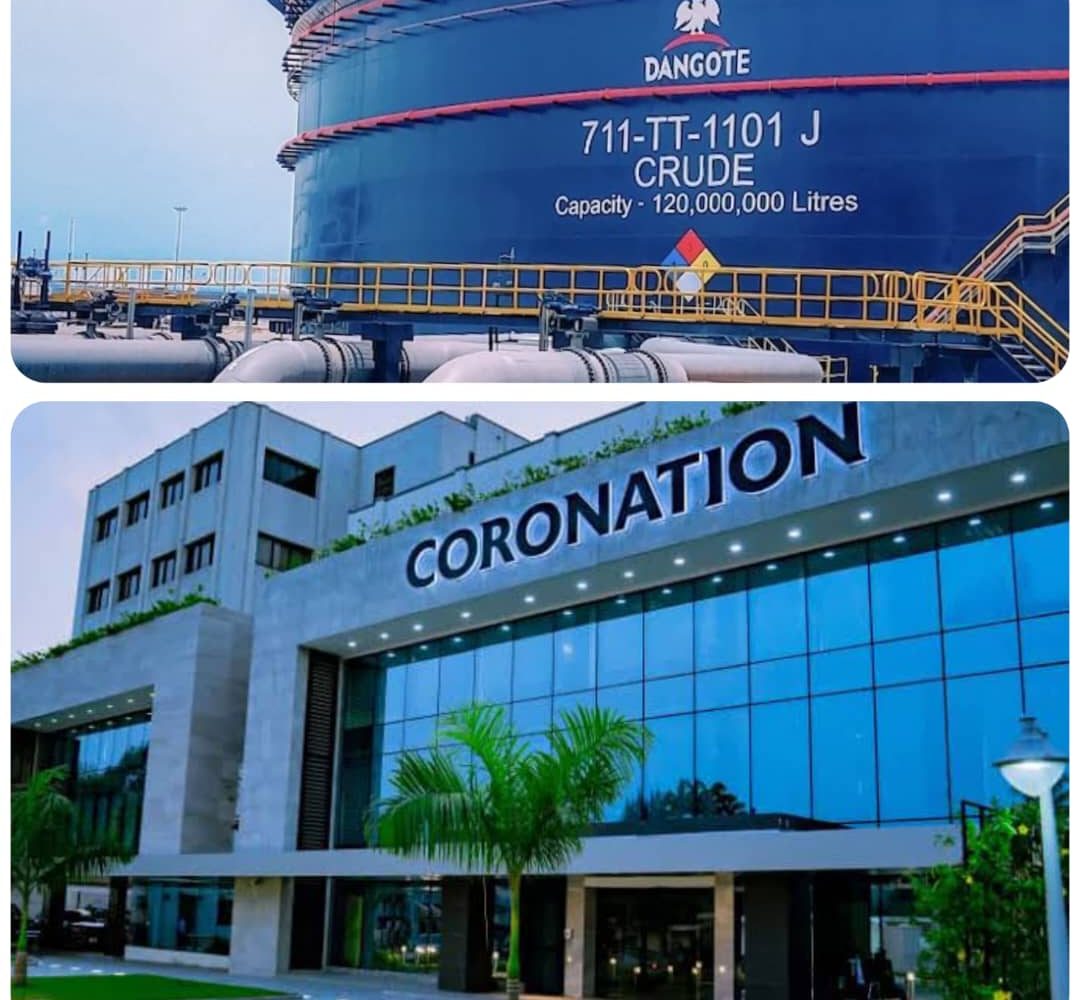
By Sadiq Tijani.
For ₦5,250 — ten shares at ₦525 — an investor can own a piece of a company that will be valued at about ₦65 trillion on the day it lists, roughly two-fifths of the entire Nigerian stock market. Africa has not seen a public share offer of this scale before, and the immediate question is whether the market can absorb it.
That question is really three questions: can the market fund the shares actually being sold; is the price a good one; and what does a company of this size do to the structure and behaviour of the market after it lists? They are not the same question, and running them together is where much of the anxiety begins.
Start with scale, because it is doing the most work in people’s heads. At ₦525 per share, the offer of 4.1 billion new shares would raise approximately ₦2.15 trillion.
With about 120.13 billion existing shares, the offer price implies a post-offer equity value of roughly ₦65 trillion before any additional shares the Issuer may allot if the offer is oversubscribed: the prospectus allows it to absorb up to 30% more, with SEC approval, which would take proceeds to roughly ₦2.8 trillion.
Against an NGX equity market capitalisation of around ₦160 trillion in early September, the refinery alone would represent roughly 40% of the whole market on paper, several times the size of the next largest listed company. But total company value, the amount of new stock being sold and the liquidity available to investors after listing are three different things.
The 4.1 billion shares on offer represent only about 3.3% of the enlarged share capital. And that is the new-share ratio, not the tradeable float: the register already shows about 6% held by August’s private-placement investors and 6.8% by NNPC, so how much actually trades will depend on the lock-up terms.
A thin float matters for liquidity and for how easily institutions can build a position, even as a company of this scale reshapes total market capitalisation and the indices that pension funds and index trackers follow. The offer opens on 14 September and closes on 13 October.
The second question is where the money comes from. The market is not being asked to fund the refinery’s full implied value; it is being asked to fund the shares on offer — approximately ₦2.15 trillion, or about 1.3% of recent NGX equity market capitalisation, before any oversubscription is absorbed.
That is substantial, but it is a different proposition from assuming that an equivalent amount must be pulled out of existing listed equities.
The offer is not underwritten. What the prospectus discloses is a cornerstone subscription commitment from a Mauritius-registered investment vehicle for up to US$400 million, roughly a quarter of the offer.
The balance could come from domestic institutions, high-net-worth and retail investors, diaspora and other eligible African investors, new money entering the market specifically for the offer, and some rotation out of existing holdings.
Only the last of these — investors selling other shares to buy this one — puts direct pressure on the rest of the market, and how much of the demand comes from that source matters more than the size of the offer.
The price deserves as much attention as the size, and gets far less. At ₦525 a share, with a minimum subscription of ten shares, the entry ticket is ₦5,250 — deliberately and unmistakably accessible.
That is central to the idea of an “IPO for the People”: widening access to ownership in a business of a scale that has historically been difficult for ordinary investors to participate in directly. But accessible and cheap are not the same word, and it matters to keep them apart.
At ₦525 the company is valued at about US$49 billion, at a time when large listed refiners in the United States, Korea and Europe trade at high-single-digit multiples of their operating cash earnings.
The premium may ultimately be justified by the refinery’s scale, growth prospects, complexity, cost position and strategic location, but that case has to be demonstrated through the numbers, not assumed from the story. An investor should be able to want exposure to the opportunity and still ask a hard question about valuation.
Pricing has a second layer that deserves attention. The prospectus says the company intends, subject to law and regulation, to declare dividends in US dollars, while reserving the right to pay in naira or another currency. Subscribe in naira and, if dividends are declared and the proposed structure is implemented, the shareholder could receive distributions in a harder currency.
That is a differentiated proposition and helps explain the offer’s appeal beyond Nigeria. It is not, however, a guaranteed cash flow. The official IPO materials are explicit that dividends depend on the company’s performance, cash requirements and decisions of its Board.
There is also a US$14.3 billion expansion to pay for, intended to double refining capacity to 1.4 million barrels a day by 2029, and the net proceeds of this offer cover only about a tenth of it; the rest comes from cash flow and borrowing.
The breadth of participation the offer is designed to attract is itself significant. The relatively low minimum ticket and the approved bank, fintech, mobile-money and broker channels remove much of the friction that has kept retail investors out of large primary offers.
So does a detail in the prospectus: every eligible retail investor who holds for twelve months receives one bonus share, and one more after twenty-four, regardless of how much they subscribed.
One share each is a flat incentive — it is worth relatively more to the ₦5,250 subscriber than to the ₦50 million one — and it is democratisation in the design of the offer rather than in the marketing. Some demand will reflect confidence in an entrepreneur and industrial platform with a visible track record.
Some will reflect a national story people want a stake in: a country that depended heavily on imported refined fuel now producing and exporting from the world’s largest single-train refinery.And some, inevitably, will be fear of missing a moment everyone else is talking about.
That last instinct deserves a plain word of caution: an accessible entry price does not make an equity investment low-risk, and borrowing to subscribe adds leverage risk on top of the risk already sitting in the shares.
Zoom out, and the real significance of this listing is continental, not only Nigerian. Dangote has framed the offer as an African investment built around a Nigerian listing, with a distribution network designed to reach investors well beyond Lagos.
If that network works — and if the stock subsequently develops credible liquidity, governance and price discovery — it would strengthen the argument that African exchanges can host assets of genuinely global scale, not only the banks and telecoms names that have traditionally dominated many markets.
The caveat is important: a small float in a very large company makes the shares more volatile in both directions. A strong order book at launch is not the same evidence as a healthy secondary market a year later. That is the test that ultimately matters.
That is why democratising access should mean more than lowering the minimum ticket. It should mean bringing more people in without lowering the bar.
A new investor ought to be able to tell a big company from a big float, an accessible price from a cheap one, and a national achievement from a suitable investment. The success of this IPO will not be measured only by how many people subscribe.
It will also be measured by whether the market that emerges afterwards is deeper, better informed and more capable of financing the next company of comparable ambition.

*Sadiq Tijani is an Equity Analyst at Coronation Research.
This article reflects Coronation Research’s analysis and is not investment advice. Investors should read the approved Prospectus and, where appropriate, consult their professional advisers before investing.





Comment here