


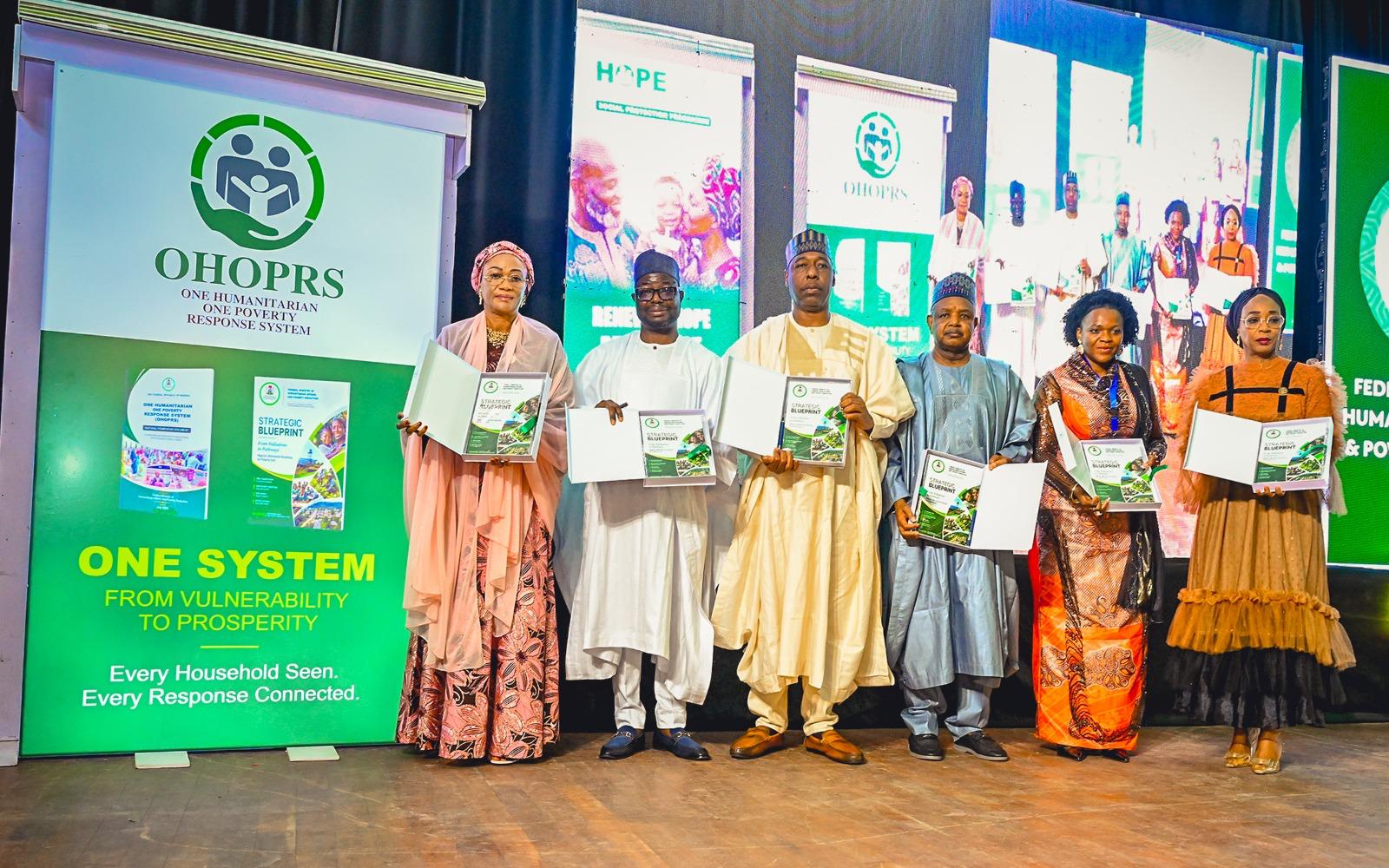
The First Lady of the Federal Republic of Nigeria, Senator Oluremi Tinubu, has unveiled a $1 billion Renewed Hope Social Protection Programme, endorsing reforms aimed at shifting Nigeria’s humanitarian response from temporary relief to sustainable pathways for resilience, self-reliance and prosperity.
Speaking at the unveiling at the Aso Villa Banquet Hall in Abuja, Mrs Tinubu said the initiatives being driven by the Minister of Humanitarian Affairs and Poverty Reduction, Dr Bernard Doro, reflected the commitment of the President Bola Tinubu administration to strengthening Nigeria’s social protection system.
She said that while the Federal Government continued to implement economic reforms to promote sustainable growth, many Nigerian families still required protection and targeted support.
The event featured the launch of the Emergency Shock-Responsive Cash Transfer Programme, targeting 7.6 million vulnerable households nationwide; the One Humanitarian One Poverty Response System (OHOPRS); the ministry’s Ministerial Blueprint; and Humanity First Magazine.
Presenting the reform framework, Doro said Nigeria’s major challenge had been the fragmentation of humanitarian and poverty reduction programmes, beneficiary registers and delivery systems across institutions and different levels of government.
According to him, the situation had resulted in duplication, with some people benefiting from multiple interventions while other equally vulnerable Nigerians received none.
He said OHOPRS would provide an integrated national framework linking humanitarian response, social protection, poverty reduction and economic inclusion, while strengthening coordination among the Federal, State and Local Governments and development partners.
Doro described the reform as a shift “from palliatives to pathways” and from reactive relief to anticipatory protection, with greater emphasis on household-centred interventions and measurable outcomes.
He said the programme would be supported by stronger data and registries, digital delivery systems, sustainable financing, accountability and improved coordination.
Borno State Governor, Babagana Zulum, who spoke on behalf of state governors, called for collaboration across all levels of government to ensure that the new approach reached vulnerable Nigerians at the grassroots.
Representatives of the World Bank and the European Union also welcomed the initiative, describing it as an important step towards building a more coordinated and systematic social protection architecture in Nigeria.
The programme is expected to strengthen efforts to move vulnerable households beyond emergency assistance towards resilience, economic inclusion and long-term self-reliance.





Comment here