


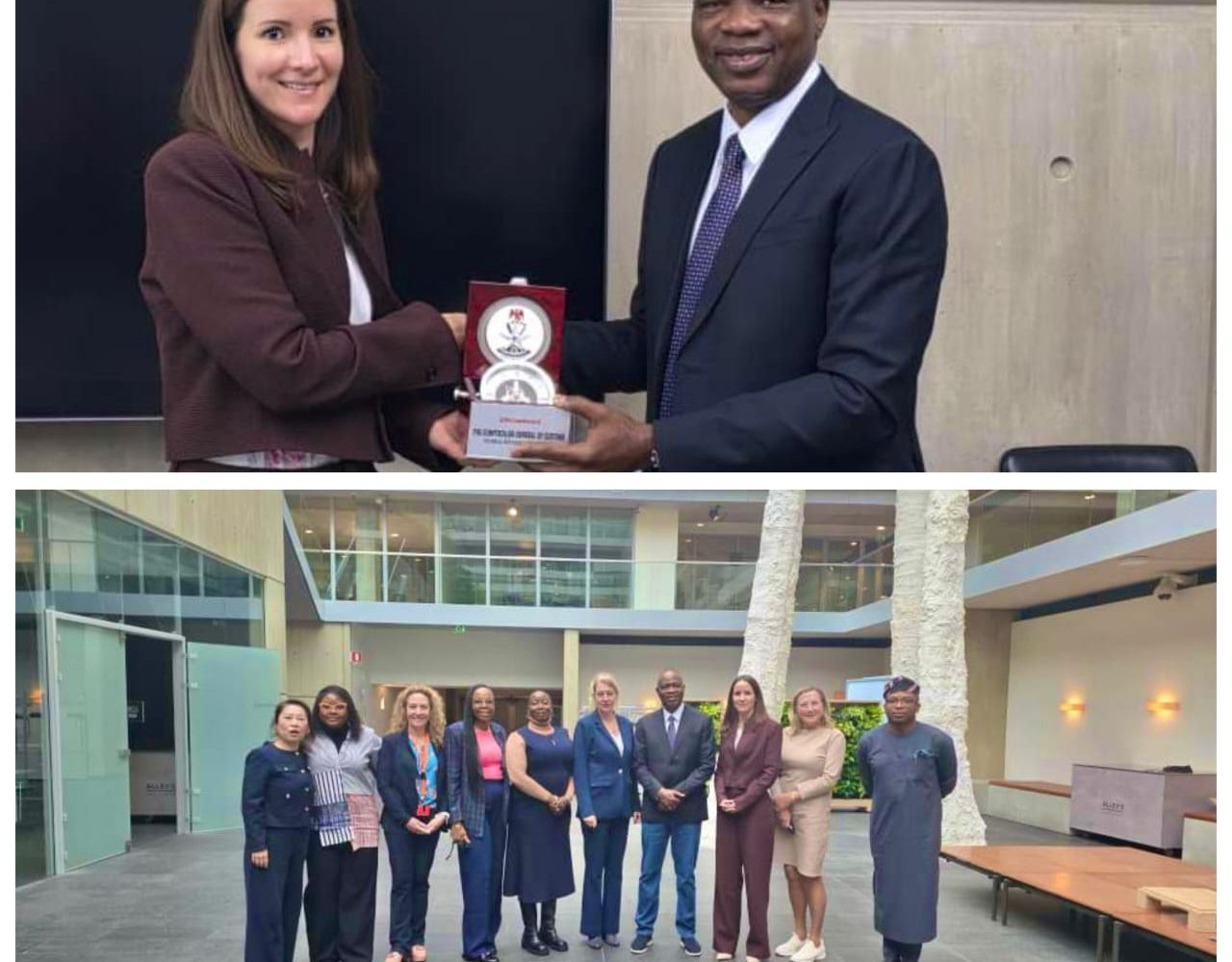
The Nigeria Customs Service has deepened its bilateral cooperation with the Netherlands Customs Administration, focusing on trade facilitation, port efficiency, and border management.
This partnership aims to strengthen Nigeria’s customs operations and enhance its ability to facilitate legitimate trade while ensuring revenue collection and security.
The Comptroller-General of Customs, Adewale Adeniyi, led a delegation to the Netherlands for a two-day bilateral working visit, where they engaged in high-level technical discussions and meetings with Dutch authorities and customs experts.
The visit included a tour of the Port of Rotterdam, where the delegation learned about integrated logistics operations, advanced cargo-tracking systems, and intermodal transport models.
Adeniyi commended the Dutch Customs’ structured approach to classification and risk management, noting that the engagements were particularly insightful in showing how systematic collaboration and data-driven analysis can enhance compliance and trade facilitation across borders.
The NCS is committed to adopting international best practices that balance enforcement with facilitation, ensuring legitimate trade thrives while revenue and security interests are safeguarded.
The visit resulted in discussions on enhancing inter-agency coordination, capacity-building exchange programs, and digital trade processes.
Both parties explored mechanisms to formalise collaboration in areas such as tariff classification, risk management, trade facilitation, and gender equity.
The Netherlands’ model demonstrates that inclusivity, data intelligence, and inter-agency trust are indispensable elements of an effective customs system.
The NCS aims to modernise its customs system, leveraging the Netherlands’ expertise to improve its operations. This partnership reinforces the NCS’s commitment to transforming its processes in line with global best practices.
The visit symbolises the Nigeria Customs Service’s strategic intent to benchmark global standards and enhance its capacity for efficient and secure trade facilitation.





Comment here