


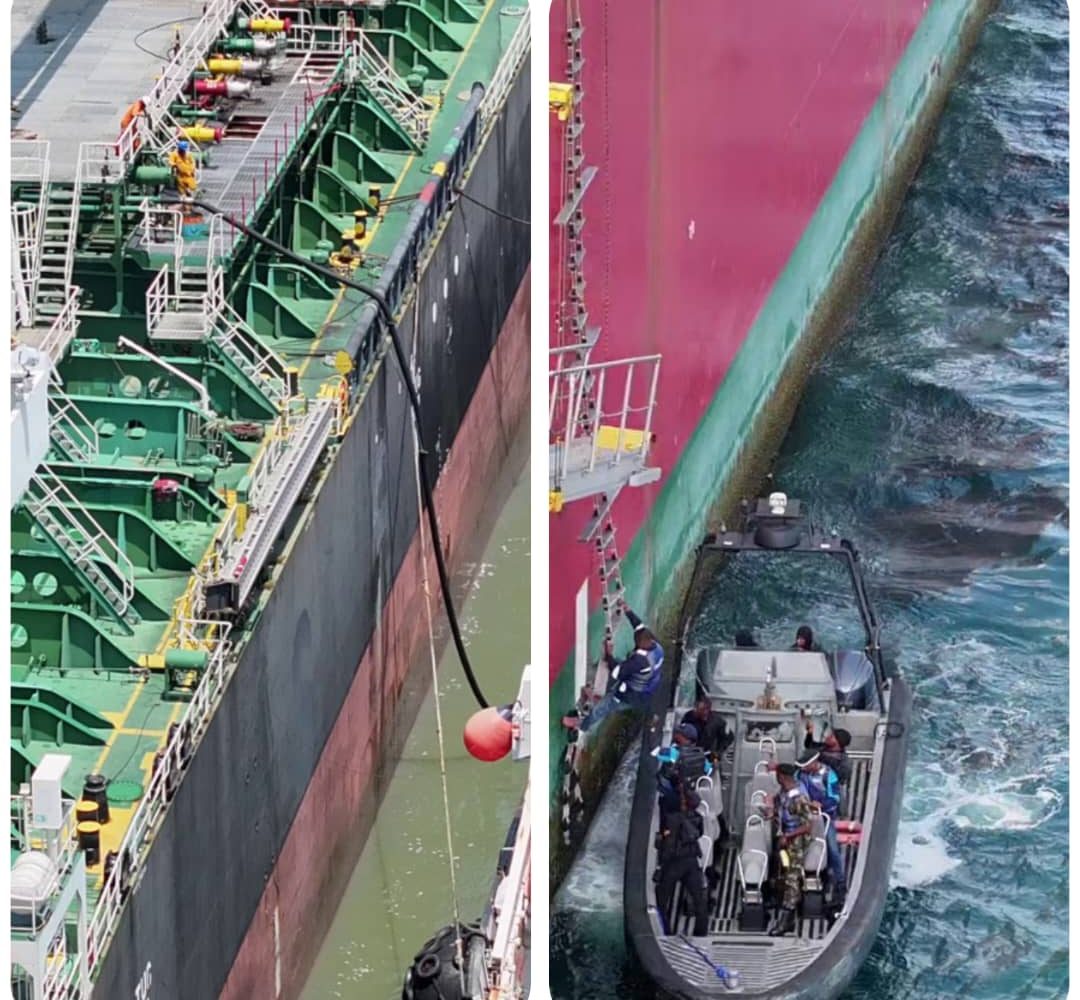
The Nigerian Maritime Administration and Safety Agency (NIMASA) has detained several vessels over alleged violations of maritime regulations during an intelligence-led enforcement operation in the Lagos maritime domain.
The operation, code-named Operation Sea Guardian, targeted vessels identified through intelligence reports and surveillance profiling as potentially non-compliant with Nigeria’s maritime laws, particularly the Coastal and Inland Shipping (Cabotage) Act.
The vessels detained included MT HOLMES, MT FUJAIRAH ENERGY, JS GRATITUDE and MT BORA. NIMASA said some of the vessels had since been released after regularising their infractions.
According to the agency, the operation was designed to strengthen regulatory compliance, verify adherence to cabotage obligations, assess compliance with applicable surcharges and levies, and ensure that vessel operators complied with relevant maritime regulations.
The exercise involved the deployment of Deep Blue assets to track, board and inspect vessels identified as high-risk targets.
NIMASA enforcement personnel conducted the operation in collaboration with the Nigerian Navy, the Maritime Guard Command and C4i intelligence personnel.
The agency explained that intelligence reports and compliance indicators were used to identify vessels with a high likelihood of defaulting on cabotage requirements.
The identified vessels were subsequently added to an existing Target Bank, a database established during an earlier enforcement operation to consolidate information on vessels of interest and guide the deployment of operational resources.
Reacting to the development, NIMASA Director-General, Dr Dayo Mobereola, said the agency would intensify enforcement operations and ensure that operators who violate maritime regulations faced appropriate sanctions.
Mobereola said the operation was part of the agency’s commitment to enforcing indigenous participation in Nigeria’s coastal and inland shipping trade.
“We had earlier served notice of enhanced enforcement of indigenous participation in our coastal and inland trade, and this is exactly what we are doing,” he said.
He urged vessel owners and operators to ensure full compliance with applicable regulations, warning that defaulters would face stiff sanctions in accordance with the law.
“It is therefore in the interest of operators to ensure total compliance because defaulters will be visited with stiff sanctions in line with the law,” the NIMASA chief added.
The agency recalled that it issued a marine notice on August 26, 2026, restating the requirements for participation in cabotage trade under its statutory mandate to promote indigenous capacity in Nigeria’s shipping industry.
The notice warned that any vessel, company, operator, charterer or other stakeholder found violating the Cabotage Act or related requirements would face enforcement action in accordance with the law.
NIMASA said the renewed enforcement drive was intended to improve compliance, strengthen indigenous capacity and ensure that operators adhered to the regulatory framework governing Nigeria’s maritime sector.




Comment here