


By Barnabas Esiet
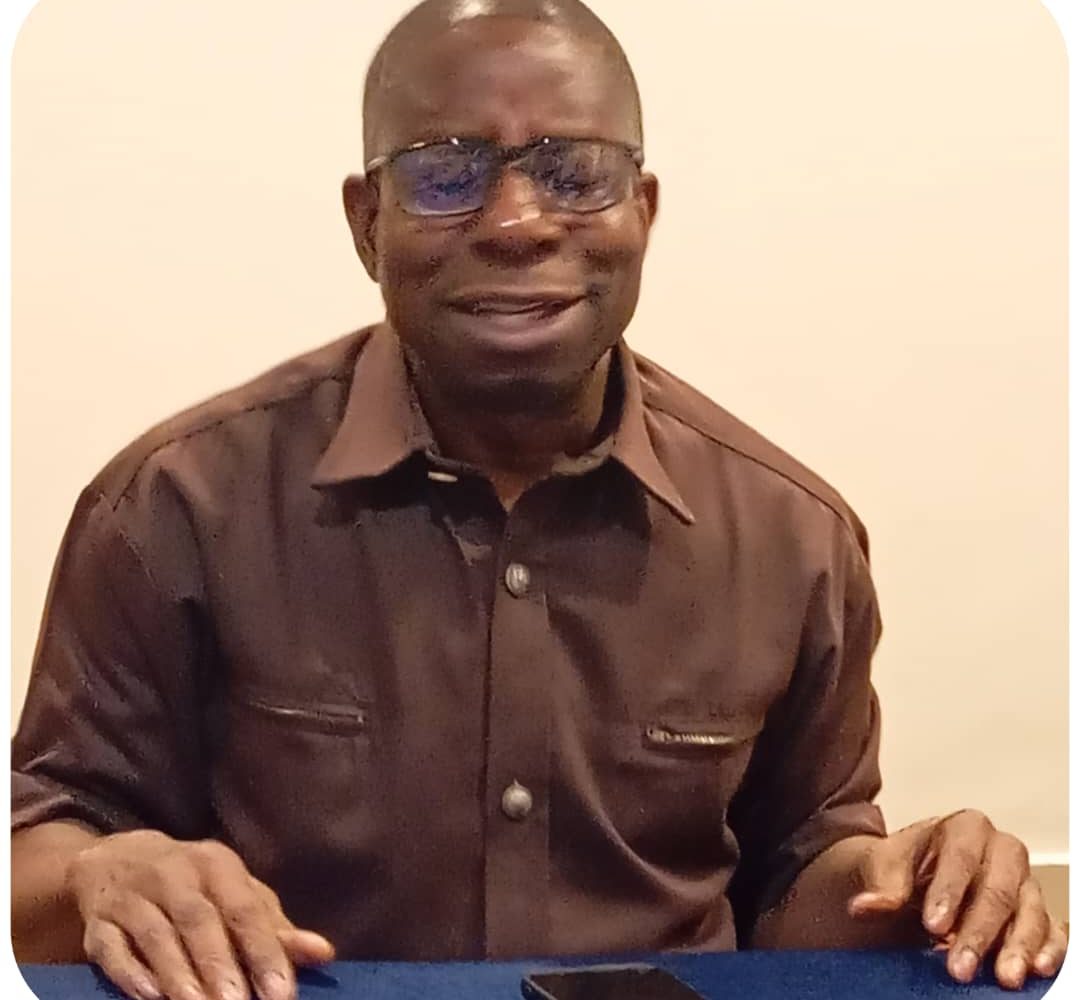
Ogaga Ifowodo, winner of the 2026 NLNG Nigeria Prize for Literature, has announced plans to establish a poetry prize at his alma mater, Federal Government College, Warri, using part of his $100,000 award.
Ifowodo disclosed this during an engagement with journalists, where he discussed his winning collection, Why Does God Need a Gun?, its inspiration and the role of poetry in confronting religious extremism, violence and injustice.
He said he also intended to use part of the prize money to pay his rent several years in advance, while describing the award as an important validation of his work and encouragement to continue writing.
The poet, who won the prize on his third attempt, said the collection was inspired partly by the story of Leah Sharibu, one of the schoolgirls abducted by Boko Haram from Dapchi, Yobe State, in 2018.
Sharibu drew widespread attention after reports that she had refused to renounce her Christian faith while in captivity.
Ifowodo said her courage and determination to hold on to her convictions despite the threat of prolonged captivity inspired him to explore the relationship between religious belief, power and violence.
He also drew parallels between her experience and that of Nelson Mandela, who spent 27 years in prison and rejected offers of personal freedom that did not address the broader struggle against apartheid.
“I saw her as a martyr for freedom, and that was the immediate spark for this collection,” he said.
According to him, the book examines how people can use religious beliefs to justify violence, persecution and the dehumanisation of others, despite the teachings of faith traditions about the sanctity of human life.
The collection also questions the conduct of religious leaders who exploit their followers through prosperity preaching and demands for excessive financial contributions.
Ifowodo said the central question behind the title was why an all-powerful God would need human beings to defend or protect Him through violence against fellow human beings.
He explained that the poems invite readers to scrutinise religious claims and consider the consequences when people present their actions as being carried out in God’s name.
Third attempt at the prize
Reflecting on his journey to winning the award, Ifowodo said his earlier collections had also reached the shortlist.
His 2018 collection, A Good Mourning, explored the June 12 political crisis in Nigeria and other tragedies across Africa, while Augustus Poodle drew on his childhood experiences, including his time as a boarding student at Federal Government College, Warri.
He said winning on his third attempt was particularly meaningful because writing is often a solitary undertaking, leaving authors uncertain about how their work will be received.
According to him, the competition attracted 223 entries, with the selection process narrowing the submissions to a shortlist of three finalists.
He described the recognition as evidence that his work had connected with an audience and as encouragement to continue developing his craft.
The award, he added, offered reassurance in a profession where writers cannot always predict whether their work will attract critical attention or reach readers.
Poetry remains relevant
Responding to questions about poetry’s relevance in an era dominated by digital media and changing reading habits, Ifowodo maintained that the art form remained an effective medium for communicating ideas and challenging society.
He, however, argued that the strength of a poem’s message depended on the quality of its execution.
“If the craft fails, the message fails,” he said, stressing that poets must pay attention to language, form and technique if their work is to achieve its intended impact.
He also attributed some of the challenges facing literary appreciation to weaknesses in the education system and the limited exposure of younger generations to established literary works.
According to him, poetry may not appeal equally to every section of society, but that does not diminish its capacity to address important questions or influence public discourse.
He cited the tradition of major literary works across different cultures as evidence of the enduring significance of poetry and other forms of literature.
Ifowodo also emphasised the importance of reading and literary education in introducing younger Nigerians to writers and works that have shaped the country’s intellectual and cultural history.
The 2026 Nigerian Prize for Literature recognition, he said, would encourage him to continue writing and contribute to the development of poetry among younger generations through the proposed award at his former school.




Comment here