‘Beyond Tarkwa Bay’: Nigerian Prize for Creative Arts Winner Seeks Better Future for Surfers
October 13, 2026037
By Barnabas Esiet.
Rume Onosode, producer and assistant director of Beyond Tarkwa Bay, one of the joint winners of the 2026 Nigeria Prize for Creative Arts, has said the production team plans to invest its prize money in supporting surfers in Tarkwa Bay, Lagos, including providing more surfboards and improving their welfare.
Onosode disclosed this during an engagement with journalists in Lagos, facilitated by Nigeria LNG Limited (NLNG), following the film’s recognition in the maiden edition of the creative arts prize.
She said the team, led by director Peter Ogenetega Oke, intends to give back to the community whose resilience and determination form the central theme of the documentary.
“We would like to invest in more surfboards for the Tarkwa Bay surfers. That’s something that they need if we want to continue this legacy of surfing,” she said, noting that the boards are expensive because they are imported.
She added that part of the prize money would go towards the surfers’ welfare and settling outstanding production-related obligations.
Beyond Tarkwa Bay tells the story of young Nigerians living on the remote Lagos island who have embraced surfing as a means of self-expression, escape and a possible pathway to international sporting recognition.
According to Onosode, the documentary highlights the talent and resilience of the young surfers despite inadequate infrastructure, limited resources and the difficult living conditions confronting their community.
She described the film as a call to action for government, businesses and other stakeholders to invest in young Nigerians and create opportunities for them to develop their talents.
“We are tired of talking about potential. We’ve been talking about potential since 1960. It’s time for us to harness that potential, and that is exactly what this film is doing,” she said.
Three-year journey to tell a Nigerian story
Onosode explained that the project began around 2022–2023 after she and Oke completed an earlier film featuring a young man from Tarkwa Bay who could surf.
The encounter inspired the filmmakers to explore the island’s surfing community, document its history and showcase a relatively unfamiliar aspect of Nigerian life.
The production, undertaken independently by a small crew, took about three years to complete, with filming involving repeated boat journeys to transport cameras, drones and other equipment to and from the island.
She said the team also had to build relationships with community leaders and residents to gain their trust and understand the social dynamics of the island.
The production encountered further challenges as changing conditions affected residents’ lives, including the arrival of the Navy and the establishment of a camp on the island, which Onosode said contributed to displacement among some members of the community.
Despite these difficulties, the surfers continued pursuing their passion.
She identified one of the project’s most significant achievements as helping Abraham, the documentary’s main subject, travel to Liberia to represent Nigeria in an African surfing competition.
According to her, the trip marked his first time leaving Nigeria and represented an important milestone for both the surfer and the Tarkwa Bay community.
“The real goal is to send a message and to touch lives,” she said, adding that the filmmakers wanted their work to produce a tangible impact beyond the screen.
Calls for government investment in creative industry
Onosode urged the government to introduce incentives and provide resources that would enable Nigerian filmmakers and other creatives to develop stories rooted in the country’s experiences and communities.
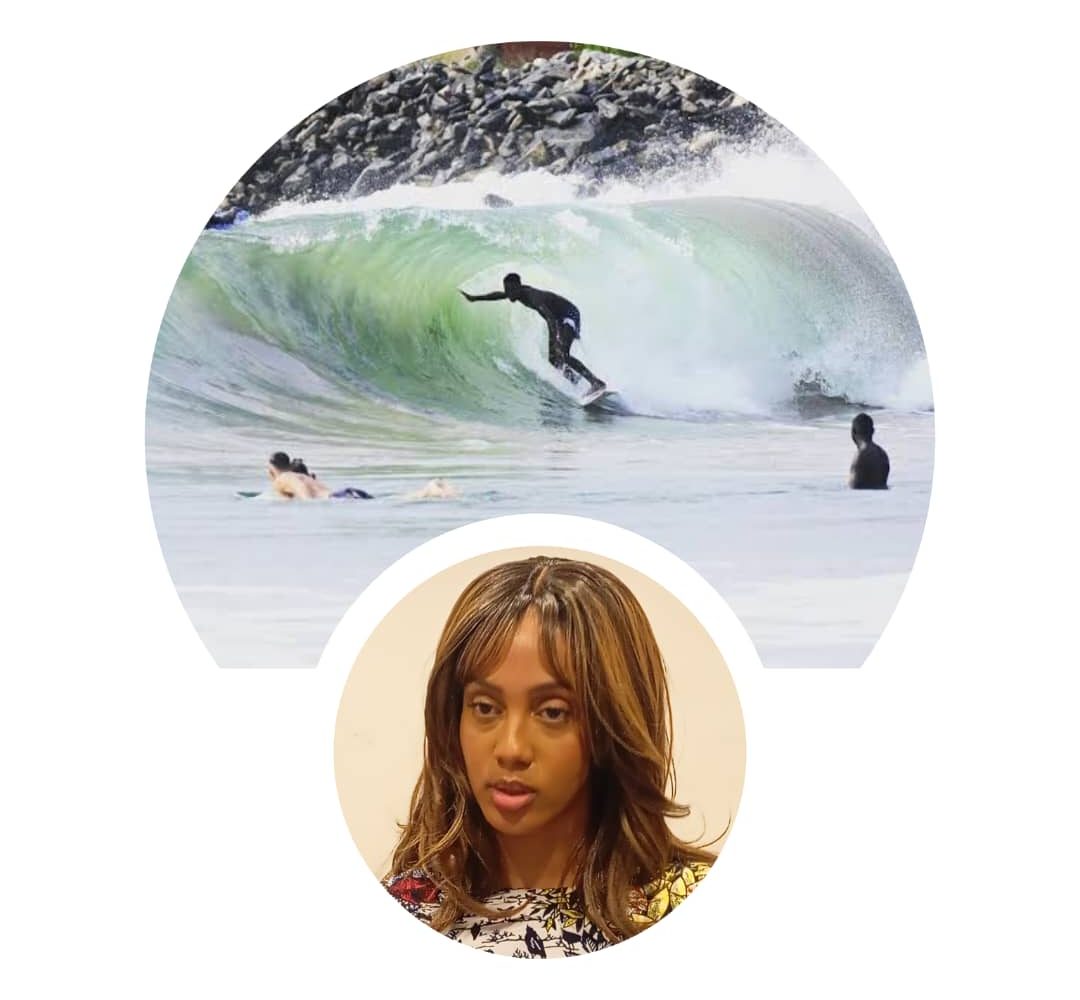
Surfers at Tarkwa Bay.
She argued that Nigeria’s growing international profile in music, fashion and film should be matched by stronger domestic support for creative projects, particularly documentaries that capture the lives of ordinary citizens.
According to her, while Nigerian entertainment has gained global attention, stories about everyday Nigerians and their struggles, talents and achievements remain undervalued.
She said Beyond Tarkwa Bay challenges stereotypes by showing young Nigerians mastering surfing, a sport often associated with other parts of the world.
The documentary, she added, demonstrates what Nigerians can achieve when given the right opportunities and support.
Onosode also called for a shift in how the country values its creative output, arguing that local stories should receive recognition and investment at home rather than depending primarily on international validation.
She said the film had already been selected for screening in Los Angeles earlier in the year before the team received recognition in Nigeria.
“We should be able to celebrate who we are first,” she said, drawing comparisons with countries that invest in their cultural industries before marketing their creative products internationally.
She stressed that supporting Nigerian creatives requires more than praise, noting that filmmaking demands substantial financial resources, time, equipment and sustained commitment.
Award a recognition of youth potential
Onosode described the 2026 Nigeria Prize for Creative Arts as a significant milestone for the production team and the Tarkwa Bay community.
She said the recognition was particularly meaningful because the filmmakers embarked on the project to tell an important story rather than to win awards.
The prize, she added, validates the importance of documenting the experiences of young Nigerians whose abilities often remain overlooked because of their circumstances.
She expressed appreciation to NLNG for recognising the project and providing a platform for the story to reach wider audiences.
Rume Onosode.
Onosode spoke on behalf of Oke and the production team, describing the recognition as an opportunity to draw greater attention to the surfers and the need for sustained investment in their future.







Comment here