


By Barnabas Esiet.
For Kazeem Fatai, graduating with a First Class degree in Electrical and Electronics Engineering was more than an academic achievement. It was proof of what can happen when opportunity meets determination.
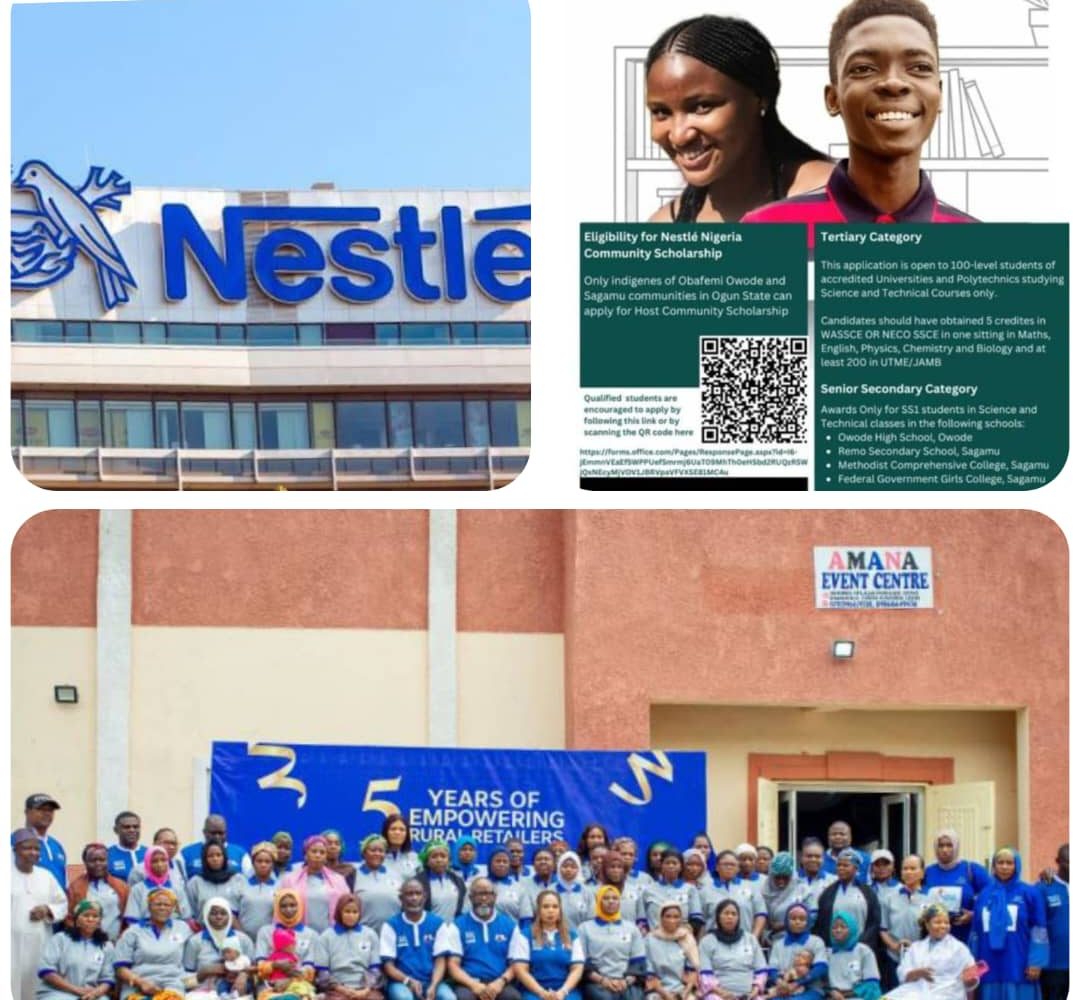
A beneficiary of Nestlé Nigeria’s Community Scholarship Programme, Fatai described the support as “a vote of confidence” that helped him remain focused throughout his university journey.
His story offers a human window into a much larger question: what does meaningful community development look like when the objective is not simply to give, but to build capacity?
For Nestlé Nigeria, the answer has increasingly been found in investments that put people at the centre.

Since its launch in 2020, the Community Scholarship Programme has supported students in communities around the company’s operations, helping cover essential educational costs.
The programme has evolved into a pipeline for young Nigerians pursuing science and technology-related education, with beneficiaries drawn from communities including Agbara, Sagamu and Abaji.
But the company’s community footprint extends beyond the classroom.
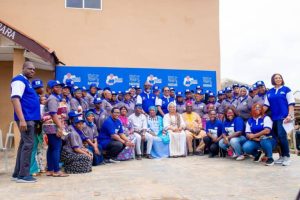
Consider the experience of women retailers. Nestlé’s Empowering Rural Women Initiative, launched in 2021, has supported hundreds of women with business training, product grants and mentorship. By August 2026, 432 women had benefited before another 50 retailers joined the programme in Zaria.
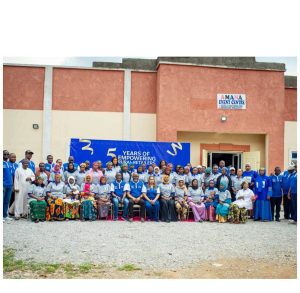
The significance is perhaps best captured by Eniola Fausat, a beneficiary in Agbara, who said the intervention opened her eyes to what was possible in her business and gave her greater confidence to support her family.
That sentiment is echoed by community leadership. Speaking for the Alagbara of Agbara, Olori Adeola Agunbiade described the initiative as an opportunity for women to build something lasting for themselves and their families, while pledging the community’s commitment to co-owning the project.
This idea of co-ownership is central to Nestlé’s wider approach.
Its 2025 Annual Report records investment in community water projects, schools, scholarships, rural women empowerment and technical training, alongside initiatives aimed at strengthening farmer productivity, employability and livelihoods.
In agriculture, the company’s dairy development work has similarly sought to strengthen communities by building capabilities along the value chain rather than providing short-term relief.
Environmental sustainability provides another dimension.
In 2026, Nestlé brought government agencies, regulators, recyclers, industry organisations and development partners together in a coalition targeting sustainable waste management across 12 locations.
The initiative builds on years of environmental engagement, with Nestlé reporting that its partnerships have helped recover more than 60,000 metric tonnes of plastic for recycling since 2019.
For Olabimpe Adenaike, Controller of the Lagos Field Office of the Federal Ministry of Environment, such collaboration contributes to environmental sustainability, community development and climate resilience.
The numbers tell one part of the story. The voices tell another.
A student who can stay in school. A woman who can expand her shop. A farmer who acquires better skills. A community that gains cleaner surroundings. These are different interventions, but they point towards the same philosophy: development becomes more sustainable when people acquire the capacity to improve their own circumstances and communities.
That philosophy is consistent with Nestlé Nigeria’s Creating Shared Value approach, which seeks to generate economic value while producing benefits for society. The company describes rural development, nutrition, water and youth empowerment as areas where it can create meaningful value for Nigerian communities.
The real measure of community development, therefore, may not be the size of a donation or the number of programmes announced.
It is what remains when the ceremony is over.
A qualification. A viable business. A stronger livelihood. A cleaner neighbourhood. A community better equipped to confront tomorrow.

That is where corporate responsibility becomes community development and where investment in people can become an investment in Nigeria’s future.





Comment here