


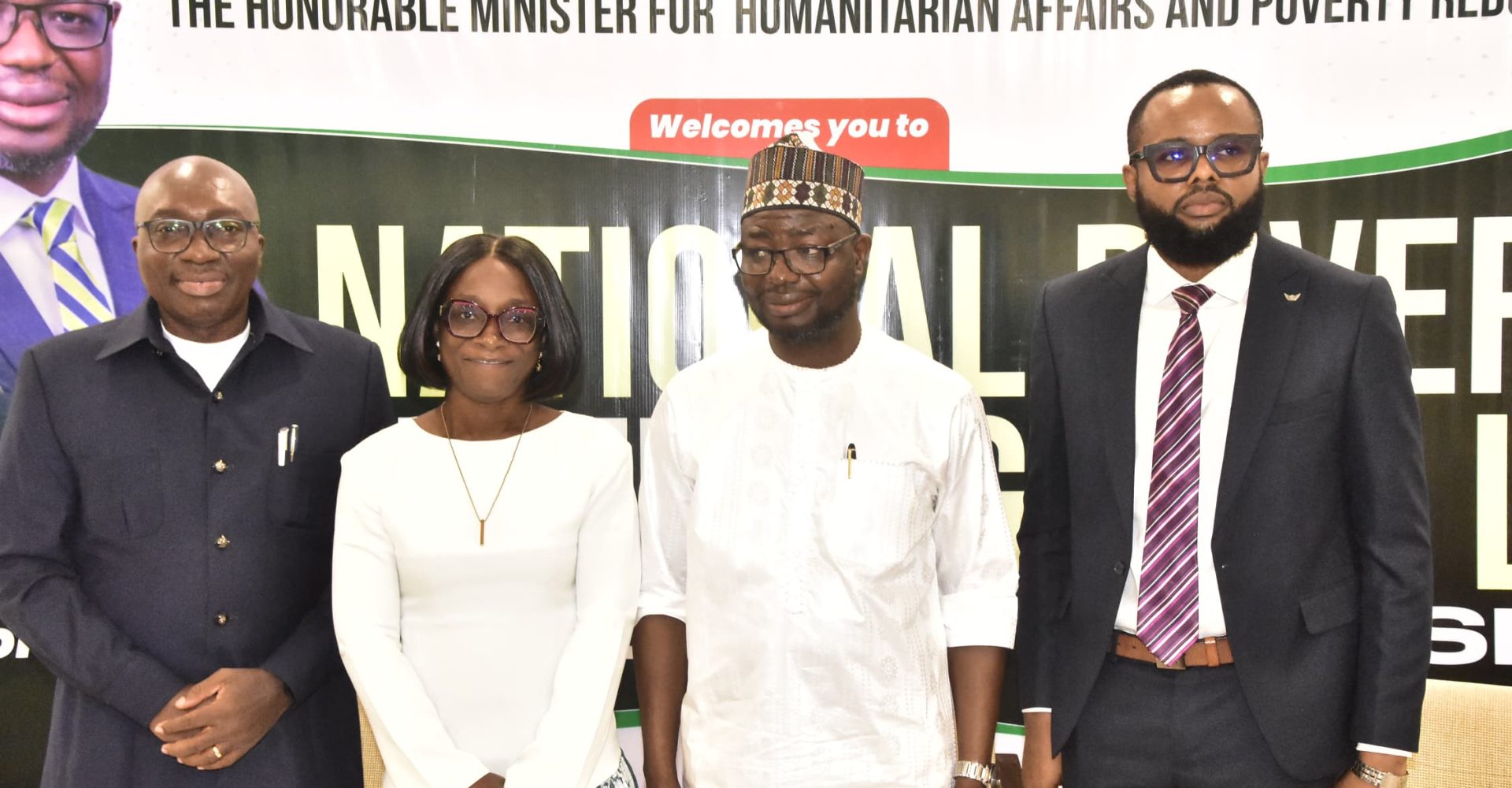
The Minister of Humanitarian Affairs and Poverty Reduction, Dr. Bernard Doro, has described the newly unveiled National Poverty Intelligence Lab (NPIL) as a transformative initiative that will reshape how Nigeria understands, responds to, and ultimately reduces poverty across the country.
Doro made the remarks on Wednesday in Abuja during the unveiling of the NPIL at the opening of a three-day workshop focused on the use of the lab’s tools and instruments to address poverty-related challenges more effectively.
The workshop was organized by the Ministry of Humanitarian Affairs and Poverty Reduction in collaboration with Innovations for Poverty Action (IPA).
Speaking at the event, the minister expressed optimism about the operationalization of what he described as a long-envisioned integrated national system for poverty intelligence and humanitarian response.
“I am super excited to witness the beginning of the operationalisation of what we have long envisioned — a truly integrated national system for poverty intelligence and humanitarian response,” he said.
Doro noted that Nigeria faces one of the most complex poverty challenges globally and emphasized the need for a departure from traditional approaches.
“What this moment demands is not more of the same. It demands systems, intelligence, evidence-driven leadership, and above all, coordinated and accountable action,” he said.
According to him, the Federal Government is determined to ensure that policies and programmes targeted at poor and vulnerable citizens achieve measurable results.
The minister explained that the National Poverty Intelligence Lab would serve as the intelligence backbone of Nigeria’s poverty reduction framework, supporting policy formulation, programme design, implementation, resource allocation, and performance management.
“For many years, our interventions have been driven by assumptions rather than evidence, sometimes by politics rather than data, and by silos rather than systems. The NPIL changes that,” he stated.
He added that the initiative aligns with President Bola Tinubu’s Renewed Hope Agenda, which seeks to move from short-term palliatives to sustainable pathways out of poverty.
Doro said the lab would play a critical role in monitoring the effectiveness of the government’s One Humanitarian One Poverty Response System (OHOPRS), a framework designed to coordinate humanitarian assistance, social protection, resilience-building, and poverty reduction efforts.
“Every household we reach through the OHOPRS is a household we intend to graduate from vulnerability — not just today but permanently,” he said.
The minister stressed that poverty reduction cannot be achieved through assumptions or fragmented interventions lacking coordination and accountability.
He described the establishment of the NPIL as a major governance, accountability, systems, and poverty-reduction reform that would support Nigeria’s transition from fragmented interventions to coordinated outcomes.
Doro also reaffirmed the commitment of the Tinubu administration to implementing sustainable poverty reduction measures and improving the living standards of Nigerians.
Explaining the rationale behind integrating the NPIL into the OHOPRS framework, he said poverty and vulnerability are interconnected issues that require a coordinated national response.
“The Lab will serve as the evidence and intelligence backbone of this system, ensuring that every intervention under OHOPRS is informed, targeted, and measurable,” he said.
He added that OHOPRS is not simply another government programme but a national operating model designed to align the activities of government agencies, development partners, humanitarian organizations, and civil society groups under a common framework.
Earlier, the Country Representative of IPA, Mrs. Fumi Ayeni, said the partnership aims to identify the actual needs of poor and vulnerable Nigerians while reducing duplication of interventions.
Ayeni emphasized that poverty reduction requires collective action and informed policymaking capable of creating a lasting impact.
She noted that the workshop would provide an important platform for discussions on practical strategies for lifting Nigerians out of poverty.
Also speaking, Dr. Abimbola Fasanu, Senior Technical Adviser to the Minister on Information Systems and Data Analysis, said participants at the workshop included representatives of IPA, development partners, heads of agencies under the ministry, programme managers, and other stakeholders.
Fasanu highlighted the importance of data in governance, describing it as a strategic national asset rather than merely a bureaucratic requirement.
“Globally, government policies and programmes are informed by data. At the end of the day, the project will enable Nigeria and the ministry to make better-informed decisions whose outcomes can be measured,” she said.
She added that the data generated through the initiative could also be accessed by private sector organizations and individuals interested in supporting humanitarian efforts.
According to Fasanu, the Monitoring, Evaluation, Learning (MEL) and Data Systems Diagnostic Exercise will assess institutional strengths, identify critical gaps, evaluate systemic capacities, and provide a roadmap for developing a modern and integrated evidence-based decision-making architecture.
She said the ultimate objective is to support faster, smarter, and more responsive decision-making that addresses the realities faced daily by an estimated 140 million Nigerians living in poverty.





Comment here