


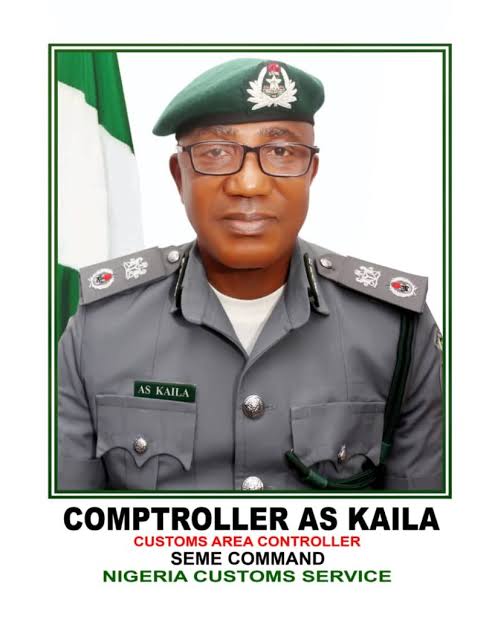
The Seme Area Command of the Nigeria Customs Service (NCS) has emerged as a key driver of regional integration, trade facilitation and border security under the leadership of Comptroller Abdullahi Kaila, according to stakeholders and observers of the Command’s operations.
As one of the busiest land borders in West Africa, the Seme Border serves as a strategic gateway linking Nigeria with neighbouring countries and facilitating the free movement of goods and persons in line with ECOWAS protocols. Under Kaila’s stewardship, the Command has implemented reforms aimed at enhancing efficiency, strengthening security and promoting regional cooperation.
Observers note that the Command has streamlined customs procedures through the deployment of digital platforms, simplified clearance processes and ECOWAS-compliant documentation, measures that have significantly reduced delays in cargo processing while encouraging legitimate trade across the region.
The reforms have also contributed to Nigeria’s growing influence within the West African sub-region. International delegations from ECOWAS, the African Union (AU) and United Nations agencies have reportedly visited the border post to study its operational model, further enhancing Nigeria’s profile in border management and regional cooperation.
In addition to facilitating trade, the Command has intensified efforts to combat smuggling and trans-border crimes. Through intelligence-led operations, strengthened patrols and collaboration with other security agencies, the Command has recorded notable seizures of narcotics, arms and ammunition, counterfeit pharmaceuticals and smuggled vehicles.
Security analysts say these interceptions have helped safeguard public health, strengthen national security and disrupt organised criminal networks operating across the country’s borders.
Revenue generation has also witnessed significant growth under Kaila’s administration. The Command has consistently surpassed its monthly revenue targets, a development attributed to improved compliance, automation and enhanced monitoring systems. The increased revenue contribution has provided additional support for government programmes and fiscal stability.
Stakeholder engagement remains another key pillar of the Command’s strategy. Regular consultations with traders, transport unions, community leaders and regional officials have helped promote transparency, encourage compliance and reduce disputes at the border.
Beyond its economic and security functions, the Seme Border continues to serve as an important socio-cultural link between Nigeria and neighbouring countries. Improved pedestrian facilities, enhanced safety measures and community outreach programmes have strengthened cross-border relationships and supported the livelihoods of thousands of people who rely on the border for daily economic activities.
Experts believe the transformation of the Seme Area Command demonstrates how effective customs administration can balance enforcement with trade facilitation while advancing regional integration goals.

With sustained improvements in security, revenue collection, trade facilitation and diplomatic engagement, the Seme Border is increasingly being viewed as a model for modern border management in West Africa and a reflection of Nigeria’s commitment to regional cooperation and economic development.





Comment here