


By Ummie Kabir
Poverty has remained one of Nigeria’s most devastating social and economic challenges, affecting millions of citizens across urban and rural communities. Rising inflation, soaring food prices, high transportation costs, increasing utility bills, and shrinking disposable incomes have combined to worsen living conditions and weaken consumer spending nationwide.
According to the National Bureau of Statistics (NBS), more than 50 per cent of Nigerians spend almost their entire monthly income on food, while over 130 million citizens suffer multidimensional poverty, lacking access to healthcare, education, sanitation, and other basic services.
Nigeria has consistently ranked among countries with the highest number of people living in extreme poverty. Although India overtook Nigeria in global rankings in 2022, the country still draws global attention because of its large population, estimated at over 225 million, and the severity of its poverty crisis.
The immediate past President of the African Development Bank (AfDB), Dr. Akinwumi Adesina, recently expressed concern over Nigeria’s economic situation, noting that the country’s Gross Domestic Product (GDP) per capita has fallen to about $824, compared to $1,847 at independence in 1960.
Speaking at an event in Lagos in April 2024, Adesina warned that Nigeria faces a deeper economic decline than many acknowledge, stressing the need for a radical restructuring of the economy to make it globally competitive by 2050. According to him, Nigerians are worse off today due to decades of poor policy choices, weak institutions, overdependence on oil, and underinvestment in critical sectors.
Over the years, successive governments have introduced several poverty alleviation programmes aimed at improving the welfare of citizens. However, many of these initiatives achieved little lasting impact due to poor implementation, corruption, policy inconsistency, and weak institutional frameworks.
Some of the major programmes introduced since the 1970s include Operation Feed the Nation (OFN), the Agricultural Credit Guarantee Scheme, River Basin Development Authorities, the Directorate of Food, Roads and Rural Infrastructure (DFRRI), the National Directorate of Employment (NDE), Better Life for Rural Women, Peoples Bank of Nigeria, Community Banks, Family Support Programme (FSP), Poverty Alleviation Programme (PAP), and the National Poverty Eradication Programme (NAPEP).
More recent interventions include the Subsidy Reinvestment and Empowerment Programme (SURE-P), Government Enterprise and Empowerment Programme (GEEP), TraderMoni, MarketMoni, FarmerMoni, the Anchor Borrowers’ Programme (ABP), and the current administration’s Renewed Hope Conditional Cash Transfer initiative.
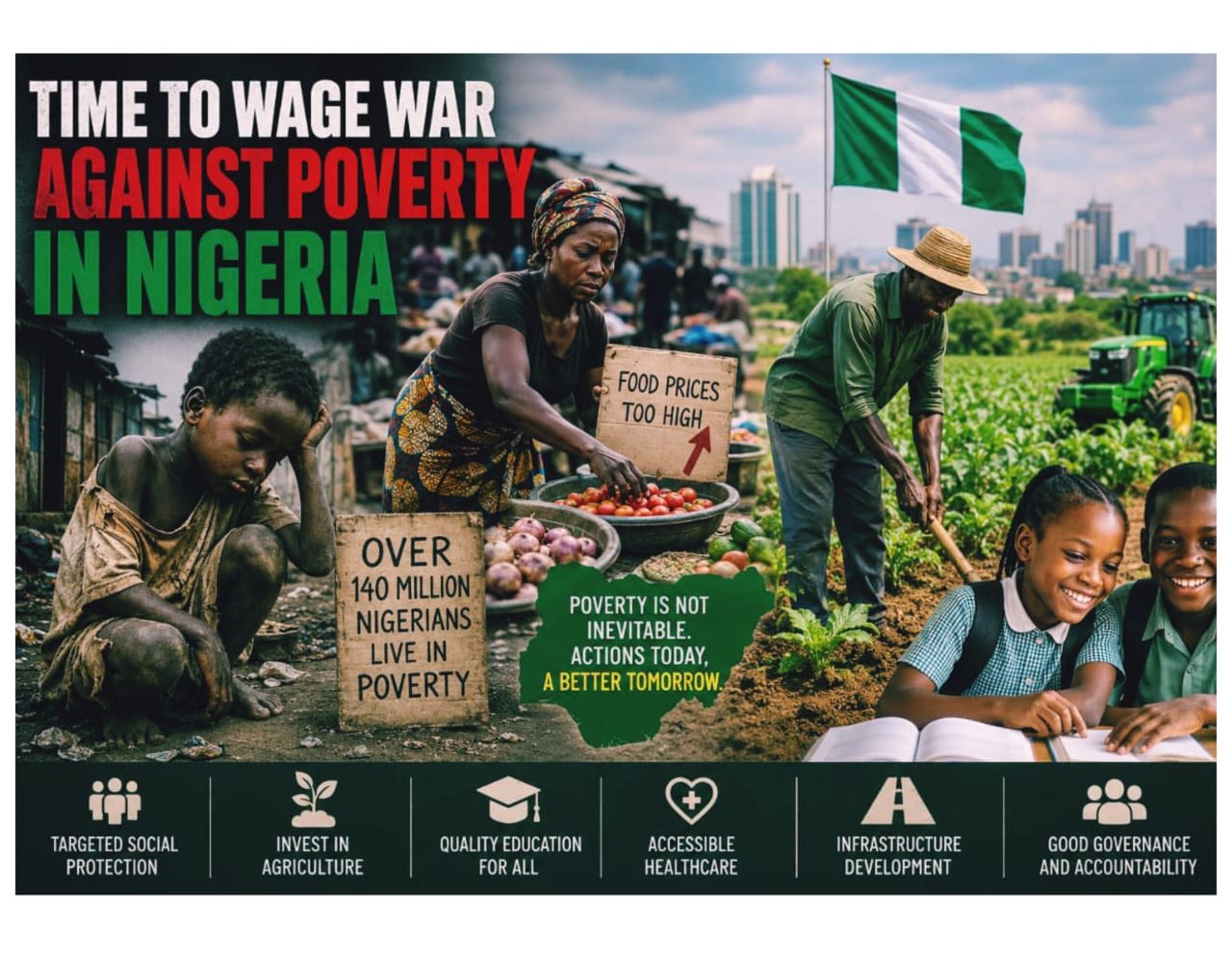
Despite these interventions, poverty levels have continued to rise. Analysts estimate that over 140 million Nigerians currently live below the poverty line.
The recent inauguration of the Grant Implementation Team for the World Bank Grant Facility for Project Preparation (GFPP) by the Minister of Humanitarian Affairs and Poverty Reduction, Dr. Nentawe Yilwatda, has once again drawn attention to the urgent need for effective poverty reduction strategies.
Similarly, the World Bank recently disclosed that poverty among Nigeria’s rural population has risen to 75.5 per cent, highlighting widening inequality and deepening economic hardship. According to its Nigeria Development Update titled “Nigeria’s Tomorrow Must Start Today: The Case for Early Childhood Development,” the proportion of Nigerians living below the poverty line increased from 56 per cent in 2023 to 63 per cent in 2025.
The report noted that while inflation has shown signs of moderation, improvements in real income and purchasing power have not followed, leaving millions of Nigerians trapped in worsening hardship.
Global consulting firm PricewaterhouseCoopers (PwC), in its Nigeria Economic Outlook 2026 report titled “Turning Macroeconomic Stability into Sustainable Growth,” also projected that about 141 million Nigerians — roughly 62 per cent of the population — may be living in poverty by 2026 if urgent reforms are not implemented.
Civil society groups have also expressed concern. The Human Rights Writers Association of Nigeria (HURIWA) recently warned that the country is approaching a socio-economic crisis driven by rising inflation, declining purchasing power, and weak economic management.
The reality is that poverty in Nigeria has reached alarming levels and now requires urgent, coordinated, and sustainable action beyond political rhetoric and propaganda.
Meaningful reforms can only succeed through strong institutions, consistent policies, transparency, and good governance. Economic growth alone cannot translate into improved living standards unless citizens directly benefit from reforms.
There is therefore a need for government policies to place greater emphasis on social welfare, targeted interventions, and inclusive economic growth.
Agriculture remains one of the most viable pathways out of poverty, especially as the sector still employs more than half of Nigeria’s population. However, the sector continues to face numerous challenges, including poor infrastructure, insecurity, outdated farming methods, post-harvest losses, and inadequate access to finance.
To improve productivity, agricultural practices must be modernised through mechanisation, irrigation, improved seedlings, climate-smart farming techniques, and better access to agricultural credit.
The Central Bank of Nigeria (CBN) recently inaugurated a new board for the Agricultural Credit Guarantee Scheme Fund (ACGSF), with Governor Olayemi Cardoso charging members to strengthen agricultural lending and support farmers across the country.
Stakeholders believe that stronger collaboration across the agricultural value chain — involving farmers, processors, aggregators, distributors, and retailers — will help reduce inefficiencies, improve food supply, and create jobs.
Security also remains critical to food production. Persistent banditry, kidnapping, and violent attacks in farming communities have displaced farmers and worsened food insecurity across many parts of the country.
Experts argue that food security must now be treated as a national security priority, requiring deliberate government action to secure farming communities and restore confidence in agricultural production.
In addition, effective social protection programmes such as conditional cash transfers, school feeding schemes, food assistance, and maternal nutrition support are necessary to cushion the impact of economic hardship on vulnerable Nigerians.
Countries such as Brazil, Ethiopia, and Pakistan have demonstrated that well-managed social intervention programmes can significantly reduce poverty when implemented transparently and efficiently.
Investment in quality education, healthcare, roads, water supply, and sanitation is also essential to breaking the cycle of poverty and improving human capital development.
Ultimately, Nigeria possesses the human and natural resources needed to overcome extreme poverty. What is required is strong political will, policy consistency, accountability, and people-centred economic reforms.
Unless reforms are deliberately aligned with social realities and citizens’ welfare, the long-term benefits of economic adjustments may be eroded by rising hardship and growing inequality.
For millions of Nigerians struggling daily to survive, reforms must not only look good on paper , they must work in practice and improve the quality of life of the people.





Comment here