


By Barnabas Esiet.
For decades, Nigeria’s maritime industry has grappled with a persistent challenge: developing a highly skilled workforce capable of competing on the global stage.
While the country boasts one of Africa’s largest economies and a strategic maritime location, many aspiring seafarers and maritime professionals have traditionally looked abroad for specialised training and internationally recognised certifications.
That narrative is steadily changing.
At the heart of this transformation is the Maritime Centre of Excellence (MCOE), established by the Nigerian Shipping and Marine Logistics Limited (NSML) on Bonny Island, Rivers State.
What began as a strategic investment in maritime capacity development has evolved into one of Africa’s most advanced maritime training institutions, earning international recognition and positioning Nigeria as a destination for world-class maritime education.
The latest milestone came with the Centre’s successful certification by the UK Nautical Institute, one of the world’s most respected maritime professional bodies.
The achievement, announced by NSML’s Managing Director and Chief Executive Officer, Abdulkadir K. Ahmed, marks another significant step in Nigeria’s quest to build globally competitive maritime expertise.
A Milestone Beyond Certification
Speaking at a press conference in Lagos, Ahmed described the certification as more than an institutional achievement.
“It is a significant milestone for our organisation and for Nigeria’s maritime sector,” he said.
According to him, the certification validates the quality, rigour and relevance of the training delivered at the Centre and confirms that its programmes meet internationally accepted standards for competence development and operational excellence.
The recognition is particularly notable because the MCOE is now licensed by the UK Nautical Institute to deliver key Dynamic Positioning (DP) programmes, including induction, simulator, revalidation and vessel maintenance courses.
Dynamic Positioning is one of the most specialised competencies in modern maritime operations, especially in offshore oil and gas activities where vessels must maintain precise positioning without anchoring.
The training is highly sought after globally and opens opportunities for seafarers to work on sophisticated offshore vessels across international waters.
With this accreditation, the MCOE has joined an elite group of institutions capable of delivering such programmes, making it one of the few centres in West Africa with this level of recognition.
Building a World-Class Maritime Institution
The Maritime Centre of Excellence was conceived as a one-stop hub for maritime research, training and professional development.
Located on Bonny Island, the facility is equipped with state-of-the-art maritime simulators and modern learning infrastructure designed to replicate real-life maritime environments. These facilities enable trainees to acquire practical experience in a controlled setting before moving into operational roles at sea.
Over the years, the Centre has steadily expanded its course offerings, covering both mandatory and specialised maritime disciplines.
Its credibility has been reinforced by several international accreditations. The Centre is certified by DNV under ISO 9001:2015 Quality Management Systems standards and DNV-ST-0029 standards covering Maritime Simulator and Maritime Training Centres.
These certifications ensure that the institution maintains globally recognised benchmarks in training delivery, quality assurance and operational management.
Beyond the Nautical Institute accreditation, the Centre also delivers courses approved by the UK Maritime and Coastguard Agency (MCA), widely regarded as one of the world’s leading maritime regulatory authorities.
Among the accredited programmes are Basic Gas Tanker Operations, Human Element Leadership and Management, Electronic Chart Display and Information Systems (ECDIS), High Voltage Operational and Management Training, and Dynamic Positioning courses.
Together, these certifications provide Nigerian maritime professionals with qualifications recognised across international shipping and offshore industries.
Developing Nigeria’s Next Generation of Seafarers
Perhaps the most impactful aspect of the MCOE’s work lies in its commitment to human capital development.
Nigeria has long faced a paradox in maritime manpower development. While thousands of young Nigerians graduate annually from maritime institutions, many struggle to obtain the sea-time experience necessary to earn Certificates of Competency (CoC), the internationally recognised qualifications required to sail on global vessels.
To bridge this gap, NSML established the Seafarers Continuous Development Programme (SCDP).
The programme provides cadets with structured sea-time opportunities, mentorship and support towards obtaining their professional certifications.
The results have been significant.
To date, 225 cadets have completed sea-time training through the programme, while an additional 54 cadets are currently at maritime colleges or onboard vessels progressing toward their Certificates of Competency.
Implemented in partnership with key institutions such as the Nigerian Maritime Administration and Safety Agency (NIMASA) and the Maritime Academy of Nigeria, Oron, the initiative serves as a critical bridge between classroom learning and professional maritime careers.
Beyond individual career advancement, the programme contributes to addressing the global shortage of qualified seafarers while supporting NSML’s objective of maintaining an 85 per cent Nigerian workforce aboard vessels under its management.
Supporting Nigeria’s Blue Economy
The significance of the MCOE extends beyond training.
As Nigeria seeks to diversify its economy and maximise opportunities within the blue economy, maritime expertise has become increasingly critical. Efficient shipping operations, offshore energy projects, port development and marine logistics all depend on skilled professionals.
Ahmed noted that strengthening maritime capacity contributes directly to trade facilitation, shipping efficiency, offshore operations and national competitiveness.
A stronger maritime workforce, he argued, creates broader economic benefits through job creation, productivity enhancement and increased participation in global maritime commerce.
Industry experts agree that capacity development remains one of the most important pillars for unlocking the full potential of Nigeria’s maritime sector.
By reducing dependence on foreign training institutions and creating local pathways to international certification, the MCOE is helping to retain talent, reduce costs and strengthen national capabilities.
Beyond Training: A Centre for Maritime Intelligence
The Centre’s activities are not limited to classroom instruction. MCOE also provides maritime research and consultancy services, supporting projects across the maritime value chain.
Its expertise covers shipbuilding supervision, commercial evaluation of maritime projects, dry-docking supervision, vessel management and crew management services.
The institution has built a reputation as a reliable technical partner, supporting maritime projects from vessel construction through delivery and operational management.
This consulting capability adds another dimension to the Centre’s role, positioning it not only as a training institution but also as a knowledge hub supporting industry growth and innovation.
Looking to the Future
While the recent Nautical Institute certification marks a major achievement, NSML views it as part of a broader journey rather than a destination.
With demand for maritime training continuing to grow, plans are underway to expand the Centre’s facilities. Supported by the Nigerian Content Development and Monitoring Board (NCDMB), the expansion project aims to increase training capacity, introduce additional courses and enhance the Centre’s ability to serve both local and international clients.
The vision is ambitious: to build a maritime institution that competes with the best in the world while serving as a catalyst for Nigeria’s maritime development.
For Ahmed, the certification represents proof that world-class maritime training can be delivered from Nigerian soil.
“It strengthens our global standing, enhances the employability of Nigerian maritime professionals, reinforces local capacity development and promotes safety and professionalism across the sector,” he said.
As global shipping and offshore industries continue to evolve, institutions capable of delivering internationally recognised training will become increasingly important. Through strategic investment, international partnerships and an unwavering focus on quality, NSML’s Maritime Centre of Excellence is positioning itself – and Nigeria – at the forefront of that future.
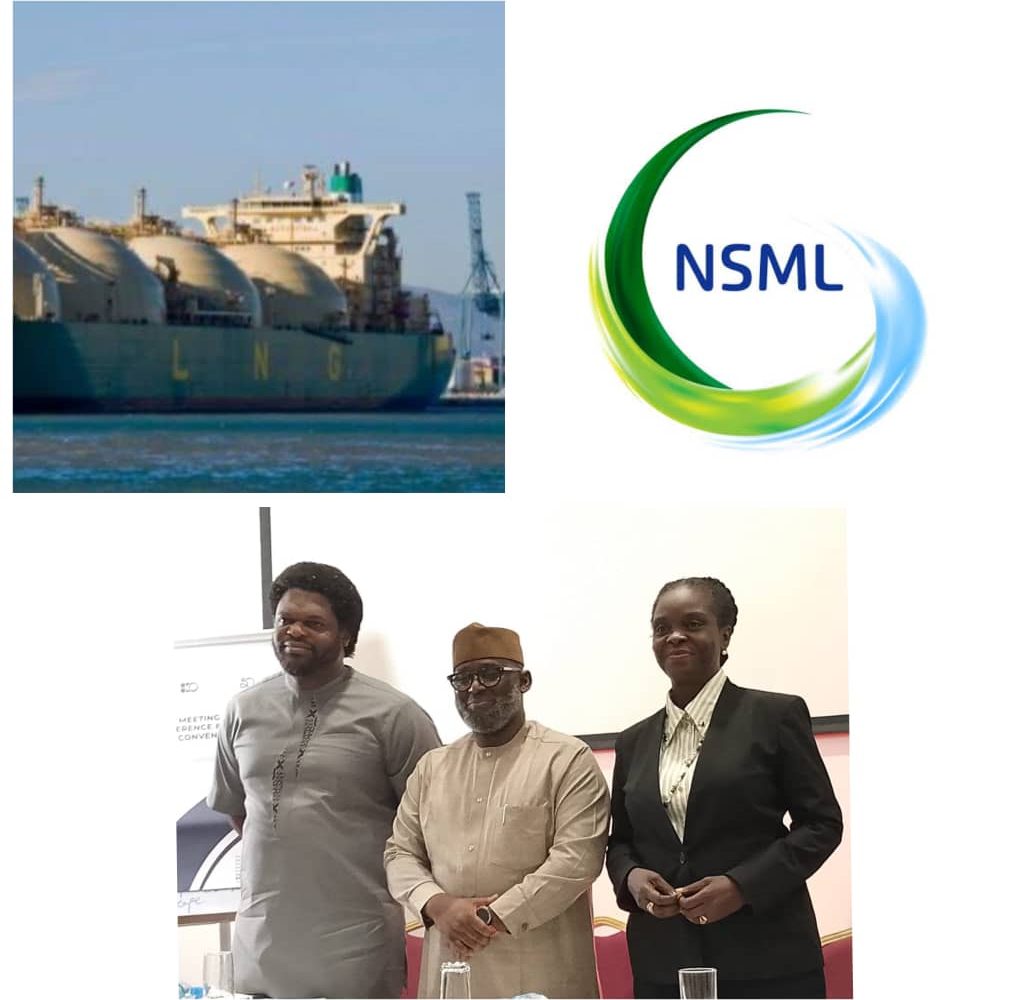
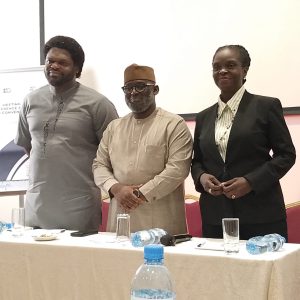
NSML’s Managing Director and Chief Executive Officer, Abdulkadir K. Ahmed (middle).
The achievement signals more than an accreditation. It represents a growing confidence that Nigeria can produce the maritime talent, expertise and innovation required to compete in an increasingly globalised maritime industry.




Comment here