


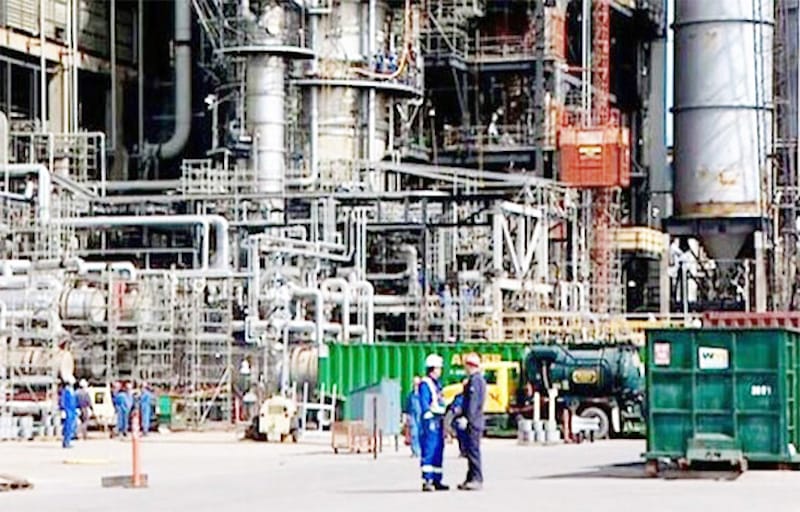
The Dangote Petroleum Refinery has announced the successful restoration and optimisation of its Crude Distillation Unit (CDU) and Motor Spirit (MS) production block, with both units now operating at their full nameplate capacity of 650,000 barrels per day.
The development marks a significant operational milestone for the refinery, regarded as Africa’s largest oil refining facility and reportedly the first refinery globally to attain this level of integrated capacity performance.
Following a scheduled maintenance exercise on the CDU and MS Block, the refinery commenced a 72-hour performance test run in collaboration with its licensor, UOP.
The tests are aimed at validating operational efficiency and ensuring that all critical parameters meet international standards.
Chief Executive Officer of Dangote Petroleum Refinery, David Bird, said the seamless reintegration and steady performance of the units reflect the refinery’s advanced engineering design and operational strength.
“Our teams have demonstrated exceptional precision and expertise in stabilising both the CDU and MS Block. This testing phase allows us to validate the entire plant under real operating conditions. We are confident that the refinery remains firmly on course to deliver consistent, world-class output,” Bird said.
He explained that the CDU and MS Block, which include the naphtha hydrotreater, isomerisation unit and reformer unit, are now running steadily at full capacity.
According to him, additional processing units will commence their performance test runs under Phase Two of the project next week.
During the recent festive period, the refinery supplied between 45 and 50 million litres of Premium Motor Spirit (PMS) daily to the domestic market.
With the restoration of the CDU and MS Block, output is expected to rise to as much as 75 million litres per day, depending on demand.
Bird expressed appreciation to customers and Nigerians for their continued support, reaffirming the refinery’s commitment to strengthening Nigeria’s energy security, reducing reliance on imported petroleum products, and positioning the country as a net exporter of refined fuels.
The milestone is expected to further boost domestic fuel availability and support broader industrial and economic development objectives.





Comment here