


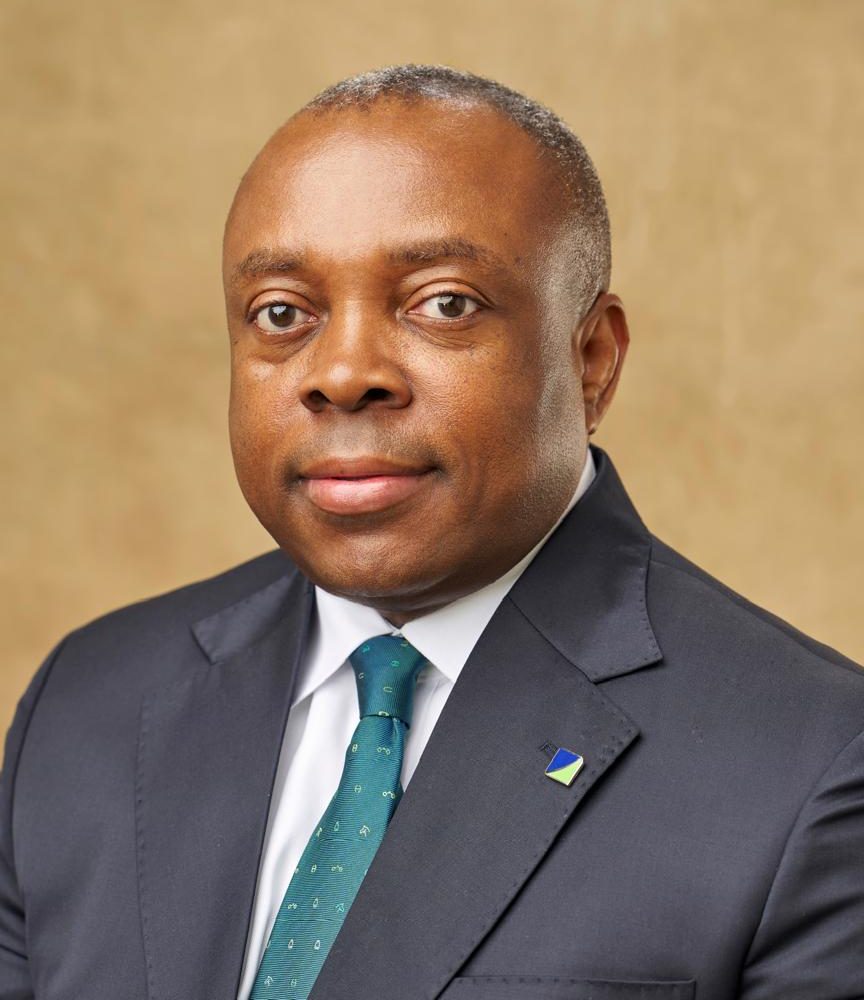
Fidelity Bank Plc is set for a leadership transition on January 1, 2027, with Stanley Chiedoziem Amuchie succeeding Dr Nneka Onyeali-Ikpe as Managing Director and Chief Executive Officer after a five-year tenure marked by significant growth in profitability, deposits, capital base and international expansion.
Amuchie, currently the bank’s Executive Director and Chief Operations and Information Officer, will assume office following the approval of the Central Bank of Nigeria (CBN), while Onyeali-Ikpe is expected to step down on December 31, 2026, after completing two tenures at the helm.
The transition comes as Fidelity Bank enters a new phase of growth, having strengthened its financial position and expanded its market presence under Onyeali-Ikpe’s leadership.
When she assumed office in January 2021, Onyeali-Ikpe introduced a seven-pillar growth strategy focusing on brand transformation, performance discipline, digital transformation, workforce development, service excellence, innovation and accelerated business growth.
The strategy delivered significant improvements in the bank’s financial performance, with profit before tax rising from N28.1 billion in 2020 to N347.7 billion in 2025, representing a compound annual growth rate of 65.4 per cent.
Return on average equity also increased from 10.5 per cent to 24.4 per cent within the period, while customer deposits rose from N1.699 trillion to N6.891 trillion.
Similarly, net loans and advances increased from N1.326 trillion to N4.282 trillion, while the bank’s customer accounts expanded from approximately 5.7 million to more than 12 million.
By 2025, Fidelity Bank had emerged as Nigeria’s sixth-largest bank, reflecting its expanding market position.
Its share price also recorded substantial appreciation, rising from N2.52 at the end of 2020 to N23.00 in November 2026.
The growth was achieved against the backdrop of significant economic challenges, including the COVID-19 pandemic, currency reforms, rising inflation, tight monetary conditions and the banking sector’s recapitalisation exercise.
Expanding international presence
Beyond its domestic financial performance, Onyeali-Ikpe’s tenure witnessed efforts to connect Nigerian businesses with international markets through the Fidelity Nigeria International Trade and Creative Connect (FNITCC).
The initiative held editions in London in 2022, Houston in 2023 and Atlanta in 2025, providing a platform for Nigerian exporters, small businesses and creative entrepreneurs to explore international business opportunities.
Speaking at the Atlanta edition, Onyeali-Ikpe explained that the bank initially focused on equipping small businesses with export knowledge in partnership with Lagos Business School before creating platforms to showcase their products and services to international markets.
She said the initiative was designed to support Nigeria’s economic diversification by strengthening non-oil exports and reducing dependence on crude oil.
The bank also expanded its international footprint through the July 2023 acquisition of Union Bank UK Plc, now operating as FidBank UK, giving it a presence in London’s financial district to facilitate trade and investment flows.
Eurobond, recapitalisation strengthen capital base
Fidelity Bank’s capital market activities also featured prominently during Onyeali-Ikpe’s tenure.
In October 2021, the bank raised $400 million through a five-year Eurobond carrying a coupon of 7.625 per cent. The offer attracted an order book exceeding $750 million before the bond was fully redeemed at maturity in October 2026.
Following the CBN’s increase in minimum capital requirements for banks with international authorisation to N500 billion, Fidelity Bank undertook a capital-raising programme to strengthen its capital position.
Its 2024 public offer and rights issue raised N175.85 billion, with the transactions oversubscribed by 237.92 per cent and 137.73 per cent respectively.
A subsequent private placement in 2025 brought the bank’s total allotted equity proceeds to approximately N402.9 billion.
The capital-raising initiatives positioned the lender to meet the new regulatory requirements while supporting its growth ambitions.
Staff welfare and SME support
Onyeali-Ikpe’s administration also introduced measures aimed at improving employee welfare and strengthening the bank’s support for small and medium-sized enterprises (SMEs).
The bank implemented salary increases across staff grades in 2022, 2024 and 2025, including two 20 per cent increases within eight months.
Annual staff promotions also increased from 337 employees in 2024 to 433 in 2026.
Other initiatives included staff transportation, improved medical support, expanded training opportunities and the extension of its mortgage scheme to employees below the Manager cadre.
In its SME development drive, Fidelity Bank established the Fidelity SME Hub in Gbagada, Lagos, in February 2025.
The facility provides training halls and Creativerse studios designed to support entrepreneurs, particularly those operating in the creative industry.
In July 2025, the bank also equipped 100 SMEs with business and inventory management systems at no cost.
The intervention included desktop point-of-sale systems integrated with ERPRev software, barcode scanners, bookkeeping training, six months of monitoring and Fidelity POS terminals with instant settlement.
The initiative was designed to improve business efficiency, inventory management and financial record-keeping among participating enterprises.
The bank noted that SMEs account for approximately 96 per cent of businesses in Nigeria and employ more than 80 per cent of the workforce, underscoring their importance to economic growth and employment generation.
In recognition of her contributions to the banking industry, Onyeali-Ikpe received the national honour of Officer of the Order of the Niger (OON) in 2023 and the Award for Excellence in Banking Leadership at the 2026 BusinessDay BAFI Awards.
Amuchie’s experience and succession challenge
For Amuchie, the incoming chief executive, the leadership transition represents an opportunity to consolidate the gains recorded under his predecessor and drive the bank’s next phase of growth.
He is not new to the institution’s transformation, having played significant roles in several strategic initiatives during Onyeali-Ikpe’s administration.
He joined Fidelity Bank as Chief Technical Consultant in March 2021 and led the $400 million Eurobond transaction, which refinanced an earlier 10.50 per cent issue and reportedly saved the bank approximately $11.5 million annually.
He also facilitated the early release of $128 million in deposits held with the CBN, making Fidelity Bank the first institution to receive such funds.
Since joining the board in January 2022, Amuchie has headed the bank’s largest directorate, overseeing more than 3,500 employees.
His responsibilities have included leading the acquisition of Union Bank UK, negotiating a $40 million facility with the African Export-Import Bank (Afreximbank) to support the acquisition, anchoring the bank’s capital-raising programme and driving its digital transformation.
Amuchie brings extensive banking and financial management experience to the position.
A First-Class graduate of Industrial Chemistry from the University of Benin and a Fellow of the Institute of Chartered Accountants of Nigeria, he began his professional career at Arthur Andersen in 1995.
He subsequently spent more than 18 years at Zenith Bank, where he rose to the position of Group Chief Financial Officer before joining Fidelity Bank.
His immediate challenge will be to sustain the bank’s profitability, deepen digital banking, strengthen asset quality, expand its international operations and maintain investor confidence amid evolving regulatory and economic conditions.
With a stronger capital base, an expanded customer franchise and an international subsidiary, Fidelity Bank is entering the transition with an established platform for further growth.
The extent to which Amuchie can build on that foundation and translate it into sustained growth and stronger market competitiveness will shape the next chapter of the bank’s development.




Comment here